


Image credit: Vanessa Burns/ Wellcome Sanger Institute.
Navigating unexpected turns, discovering her passion and striving for work with real-world impact – reflections from Vanessa Burns, PhD student at the Wellcome Sanger Institute.
She learned rhythm first through movement – counting beats of music in a dance studio long before she was counting variants in a genome. What started as a life shaped by choreography and performance gradually shifted into a different kind of precision: one measured in sequences, signals and subtle biological variation.
Now a fourth-year PhD student in Professor Matthew Hurles’ lab at the Sanger Institute, Vanessa Burns carries that same sense of rhythm into her scientific work, moving between wet lab and computational spaces to study how DNA variation contributes to rare disease and to develop large-scale functional data to improve clinical diagnostics.
Alongside research, she is involved in voluntary work, bringing the same curiosity and care beyond the lab into community-facing spaces.
And yet, she is still finding her groove – figuring out what comes next, what role she wants to take on beyond her PhD, and how to keep balancing curiosity and care in whatever form her next step takes.
In this blog, Vanessa reflects on a journey that connects movement, science and finding direction within and beyond her PhD.
What is your day to day like as a PhD student at Sanger?
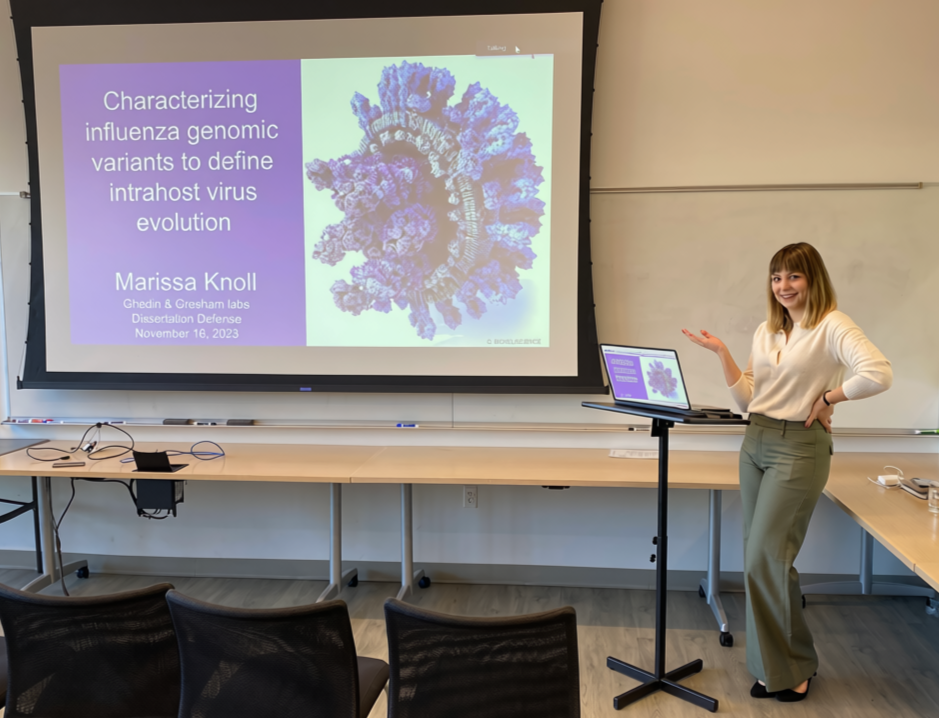
I am a fourth year PhD student in Matthew Hurles’s team. What my day looks like varies day to day, as my PhD work has been split between wet lab and computational work. If I'm running an experiment, I would typically get to the lab quite early, do some tissue culture, maybe have a meeting with colleagues in the afternoon, and then do some benchwork later on, for example, extracting DNA and prepping samples for sequencing. At the moment, I'm nearing the end of my PhD, so I'm very much more at my desk, doing some analyses of the data I’ve generated, but also writing everything up. I've really enjoyed having a PhD that has these different elements. The immediacy and portability of computational work is really nice, but I do appreciate the slightly more active and sociable side of wet-lab work.


What are you plans after your PhD?
My PhD finishes at the end of September. I am broadly passionate about translational research in human genetics, and my PhD research, which has primarily focussed on rare disease diagnostics, fits really beautifully into my academic interests. I was quite fortunate in knowing exactly what my interests were going into my PhD, but I’ve always known that my end goal probably wasn’t going to be academia. Following my PhD, I hope to qualify as a genetic counsellor, as alongside being passionate about disease diagnostics, I'm also passionate about patient advocacy. So, I would love to be in a space where I can keep a pulse on the research like now, while also having the opportunity to speak directly to patients to help empower and support them through their diagnostic journeys.

What is your background in?
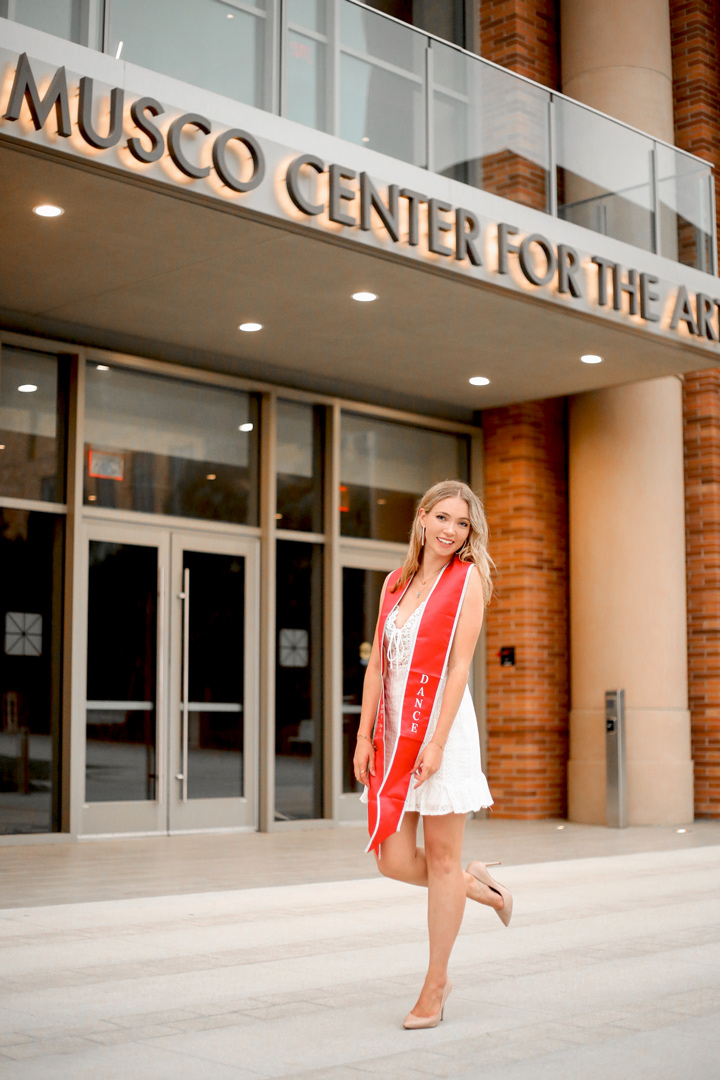
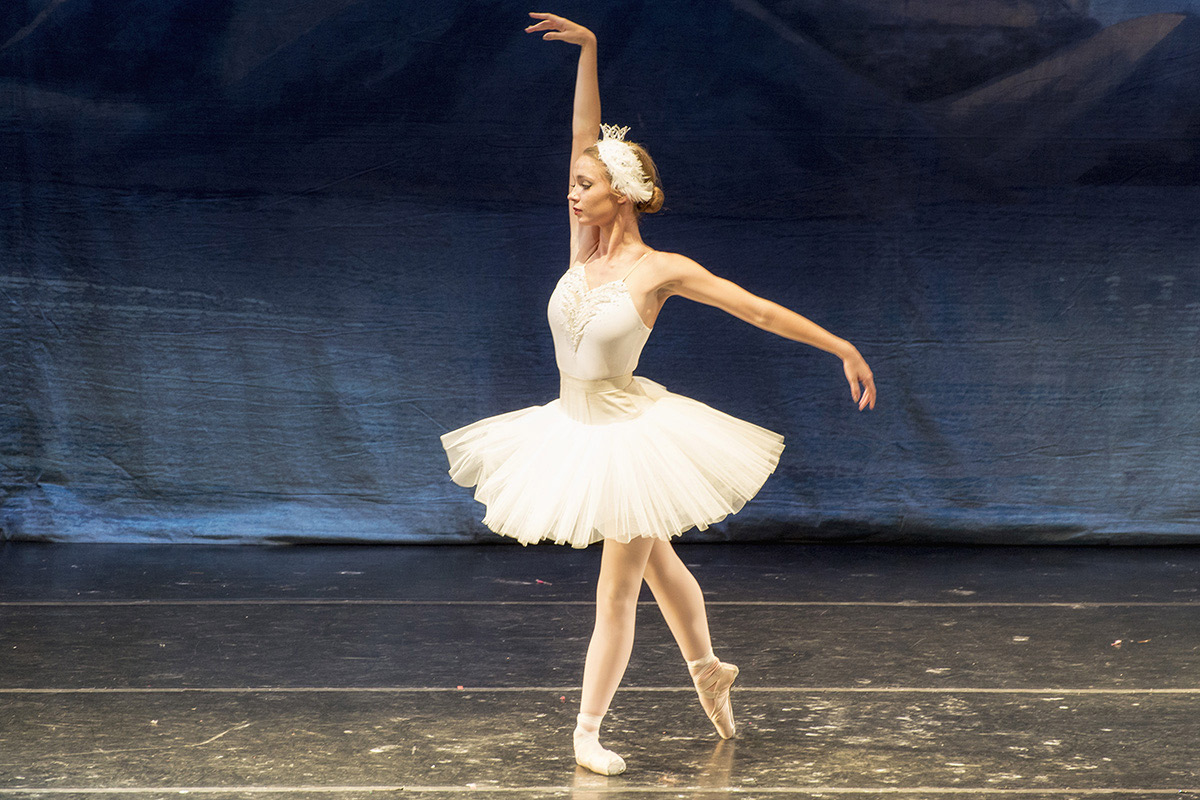
I did my undergraduate degree at Chapman University in Orange, California. I was actually a double major, meaning I completed a bachelor's in biological sciences, as well as a bachelor’s in dance. It was really fun. I did dance as a hobby as a child and did almost every style, but ballet was my favourite. In undergrad, you had to take classes in ballet, jazz, contemporary and modern, and then you could dabble in whatever else you liked, so I did pointe (a classical ballet technique) and then salsa on the side as well.

I took one class in genetics and realised that was the area of biology I was most interested in. I initially was thinking to take a gap year and then do medicine, but I learned I could do a master's in one year in the UK. So, I applied and got into the MPhil in Genomic Medicine at the University of Cambridge in 2020. It taught me that I really liked genomics and rare disease, but it was during the pandemic, so when I should have been getting lab experience, I wasn't. I actually wound up doing a second master's after that at Imperial College London in Reproductive and Developmental Biology, which gave me the lab experience I was after.
Through that I decided I definitely wanted to do PhD. I got accepted onto a PhD programme at Cambridge, but on my first day, my supervisor told me that she was moving her lab to another university in another country. I didn’t want to relocate, so I spent two months being a registered PhD student at the university but not actually doing anything.
To see where I could get a different PhD project, I had to shoot my shot and send some emails around. I immediately thought of Sanger because I knew I was passionate about clinical genetics, and I found an email address for the Postgraduate Office and just tried my luck. I named Matt's team, because in my master's I worked with data from the Deciphering Developmental Disorders study, which Matt led, so I thought that would be a good fit. They then passed me on to Matt, and I immediately knew I was right. One Hail Mary email and a few Zoom calls later, I landed here at Sanger in Matt's team.
“One Hail Mary email and a few Zoom calls later, I landed here at Sanger in Matt's team.”
What has it been like moving from sunny California to Cambridge?
My mum grew up in Italy and my dad grew up in England, but they both went to the US to work. My dad was an engineer and my mum a biologist, and they actually got set up by a friend my dad met in Cambridge! I think because I was raised by Europeans, I have felt more at home here. The people I have met, I have instantly made quality friends with. As I said, my plan was originally to do medicine, so I thought I was going to come here to do a one-year master's and go back. But then, I met my partner of now five years and found a research space I’m passionate about, so I have no intent of leaving anytime soon.
What is your PhD focussed on?
Matt’s team focusses on developmental disorders, mainly from a diagnostic perspective. My PhD has centred on saturation genome editing (SGE), a CRISPR-based method that allows us to systematically test genetic variants at scale. The overall aim is to understand which changes in DNA are likely to cause disease and build resources that can help clinicians make more confident diagnoses for patients.
Overview of saturation genome editing (SGE)

CRISPR-Cas9 is used to introduce a library of thousands of designed DNA variants into cells at a target region (steps 1–2). Edited cells are cultured for approximately three weeks (step 3), and the relative abundance of each variant is compared before and after growth to identify edits that disrupt gene function (step 4). Identifying these damaging variants can help pinpoint those likely to cause disease. Image credit: Vanessa Burns.
My work has focussed on 5 prime untranslated regions (5′ UTRs), which are non-coding but still functionally important and relatively understudied. I’ve performed SGE screens in the 5′ UTRs of neurodevelopmental disorder genes, allowing me to identify patterns and derive general rules for interpreting variation in these regions.
Compared to protein-coding regions of the genome, where changes are more predictable, I explored a wider range of variation in these non-coding regions. Most changes had little effect, but one group clearly stood out: those that created a new start codon – a signal to begin making a protein – in the wrong place. These are most impactful when the new start sits in a strong Kozak sequence – a short stretch of DNA that helps the ribosome (site of protein synthesis) recognise where to begin protein production – and when it leads to production of a protein that overlaps significantly with the coding sequence. Together, this gives us a simple way to flag which variants are more likely to have meaningful impact. The next step is to apply these rules to clinical and population datasets to build stronger evidence about whether these variants are broadly disease-causing, beyond the specific genes I’ve investigated so far.
Alongside this, I’ve also performed SGE across the gene SMC1A, which is associated with two distinct neurodevelopmental conditions. More broadly, these SGE screens fit within the field of multiplex assays of variant effect (MAVEs), and large-scale efforts like the Atlas of Variant Effects Alliance, which aim to map the effects of all human genetic variation. These resources have clear potential to improve diagnostics and ultimately inform prognosis and therapeutic development.
RELATED SANGER BLOG
Nine billion and counting – Mapping the human variants and their effects on health and disease
The Sanger Institute is a leading collaborator in the Atlas of Variant Effects Alliance, which seeks to understand the effects of all variants in our genomes. Find out more about this colossal effort...

What are the most rewarding and challenging aspects of your work?
It's very exciting to be doing something totally new but at the same time, you have to do it from the ground up. There's no structure to follow, so you're figuring it out for yourself. It's a timely process, which means that there's delayed gratification. For example, you can put a lot of thinking into a project, then designing it, prepping and running the experiments, sending the samples for sequencing and then looking at the data. By the time you've gotten there, it's been years. It's hard to manage expectations and it’s also easy to get ahead of yourself.
“The bit I most enjoy with research is how clear the connection is between the data that's being generated and the impact it will have.”
On the flip side, when you do finally get there, and you have the data in front of you, it’s great. I think the bit I most enjoy with research is how clear the connection is between the data that's being generated and the impact it will have. I really like knowing that even one little variant of interest that I find in one of the experiments might help a specific patient or family that's been waiting for a diagnosis, so it's super rewarding to know that you're playing a part in that.
What advice would you give to others?
For me, it's not been a very linear journey. What started with a class I was interested in during my undergraduate studies led me on this path. I definitely didn't need two master’s degrees and a PhD to wind up being a genetic counsellor, but I think following each of those individual interests and seeing where it led me is absolutely the reason why I'm so confident in what I want to do now. And it's the reason, I think when doing a PhD, it's incredibly important to be passionate about the work you're doing. Because if you're not, it's not necessarily going to be a very enjoyable experience. So, I think, even though not every degree has been strictly necessary, I can definitely credit it to why I found the space that I'm passionate about and why I've learned so much about myself and what I want to do along the way. I think my advice would be don't worry about the journey, follow the little interests, see where it leads you; it might teach you something new about the field you do or don’t want to be in. Career paths don't have to be linear, and you can always change your mind, so you may as well give it a shot.
What do you like to do in your spare time?
I do dance from time to time, though maybe not as much as I used to. Other than that, I do a lot of volunteer work. I really enjoy writing, so I write for an organisation called the Progress Educational Trust (PET). They publish articles in and around genomics and fertility, so I write news articles and comment pieces for them in my spare time, which I really enjoy. It’s fun to engage with the broader field in this way.
“Aged 22, I found out that I'm donor conceived via egg donor. Donor Conceived UK endeavours to advocate and support for donor-conceived people in the UK and I'm a trustee for them.”
My biggest involvement is with an organisation called Donor Conceived UK. Aged 22, I found out that I'm donor conceived via egg donor. Donor Conceived UK endeavours to advocate and support for donor-conceived people in the UK and I'm a trustee for them. They run events and meet-ups, and I lead support groups available to almost 1,000 donor-conceived individuals. Every six months, we hold an event in London, where we all meet up and chat about our different stories. We also have a presence at different conferences. The other month I went as a representative for them to Surrogacy UK – a conference for surrogates and families looking to use a surrogate.
I think it’s a really rewarding space to be in. Because I’m involved in genetics through work and I also have my own experience of being donor conceived, it’s been great to meet others and broaden my understanding of the different perspectives and experiences people can have – personally, genetically and also in terms of the legislation surrounding it.

Vanessa volunteering with Donor Conceived UK. Image credit: Vanessa Burns.
What is something that has inspired you recently?
I read a book called Triple Helix by Lauren Burns – we’re not related – who’s donor-conceived. She shares the story of coming to know her biological identity in Australia, at a time when there was very little legislation protecting donor-conceived people. So, she went on to become part of the political movement that successfully campaigned to lift donor anonymity in Victoria, Australia, in what became the first jurisdiction in the world to retrospectively remove donor anonymity. Reading it was a reminder that change doesn’t happen unless someone actively pushes for it. It also made me reflect on my own work – how, as scientists, we can sometimes lose sight of the personal impact behind what we do. So overall, it felt like an important and grounding reminder.
Find out more
- Vanessa Burns' profile on the University of Cambridge website
- Professor Matthew Hurles
- Professor Matthew Hurles’s research team
- Sanger Institute Postgraduate Office
- Deciphering Developmental Disorders study
- Atlas of Variant Effects Alliance
- Progress Educational Trust (PET)
- Donor Conceived UK
- Surrogacy UK


