


Image credit: Ernesto del Aguila III, NHGRI.
From bacterial defence to breakthrough therapies, we explore how CRISPR-Cas is transforming research and healthcare, and how experts at the Wellcome Sanger Institute are refining the technology to make genome editing more scalable and effective.
Clustered Regularly Interspaced Short Palindromic Repeats (CRISPR)-CRISPR-associated (Cas) systems have transformed the way scientists study the genome. What was once a naturally occurring bacterial defence system has rapidly evolved into a versatile genome editing toolkit for understanding gene function, modelling disease and developing new therapies. At the Sanger Institute, CRISPR-Cas technologies are being applied at an unprecedented scale, helping researchers answer some of biology's biggest questions.
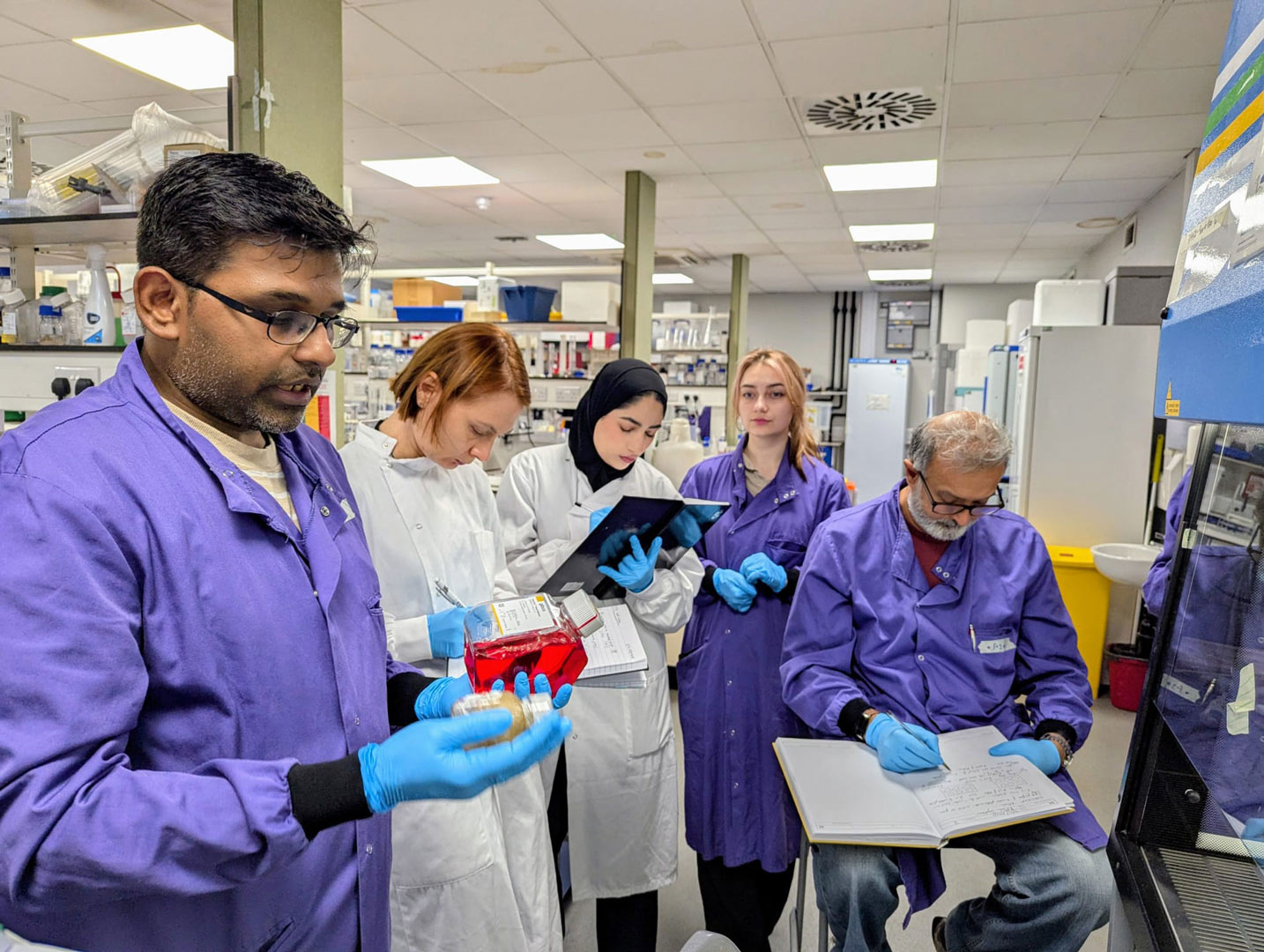
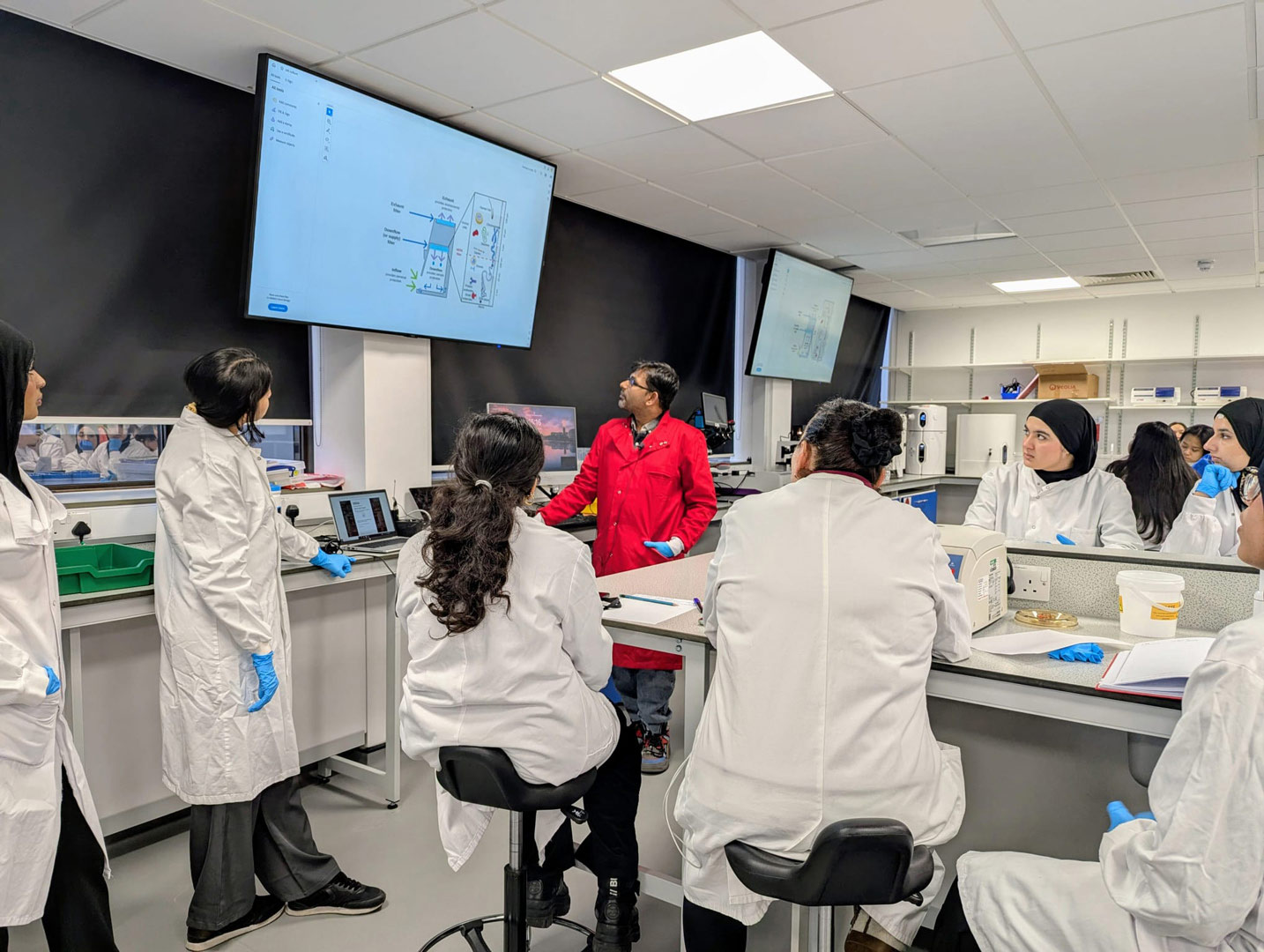
Few people have seen that transformation as closely as Dr Sandeep ‘Sandy’ Sundara Rajan, Technical Specialist. As part of the Cellular Platforms team at Sanger, he works at the intersection of technology development and scientific discovery, taking cutting-edge CRISPR-Cas methods and turning them into robust, high-throughput pipelines that support research across the Institute. His role is to optimise new genome-editing approaches and scale them up, so that what works for a single experiment can be applied efficiently across hundreds of genes or cell lines.
In this blog, Sandy explains how CRISPR-Cas works, how it is being used at Sanger and why he believes the next decade – powered by increasingly sophisticated genome-editing tools and artificial intelligence (AI) – could fundamentally change the way we understand and treat genetic conditions.
What exactly is CRISPR-Cas and why has everyone in science been talking about it for the last decade?
CRISPR-Cas is a natural defence system found in bacteria and other simple organisms. For millions of years, bacteria have used this system as a type of immune system to protect themselves from viruses. It works through proteins called Cas enzymes, which can recognise and cut the genetic material of invading viruses. Scientists discovered this natural process and adapted it into a powerful gene-editing tool, allowing them to make precise changes to DNA.
What has transformed the field over the last decade is our ability to harness and reprogramme these enzymes. By designing them to recognise specific DNA or RNA sequences, we can direct them to almost any genetic target of interest. This programmability is what makes CRISPR-Cas such a powerful tool for molecular biology.
At its core, molecular biology is the study of how genetic material is read, copied, modified and understood. Modern molecular biology increasingly depends on our ability to analyse and manipulate genetic information, and CRISPR has dramatically expanded what scientists are able to do with genes. CRISPR has made these processes far more precise, efficient and accessible than ever before, which is why it has generated so much excitement across science over the past decade.
How does CRISPR-Cas actually ‘edit’ DNA?
CRISPR-Cas enzymes are essentially molecular scissors that can be used to cut DNA. We can then use them in conjunction with other enzymes that can copy, paste or modify DNA.
The programmability – or the way CRISPR-Cas recognises specific DNA or RNA sequences – comes from the Cas proteins. They're a family of enzymes, with each member having different properties. Some use guide RNAs – short RNA molecules that direct the enzyme to a specific genetic sequence – to target double-stranded DNA, while others target RNA, and so on.
The way the system works is that the Cas protein associates with the guide RNA. The guide RNA contains a sequence that is complementary to the DNA sequence you want to target. So, it's the guide RNA that acts as a tracker, directing the Cas enzyme to a specific location in the genome.
The Cas enzyme itself is a nuclease, meaning it has the ability to cut DNA once it has recognised and bound to its target. It creates a break in the DNA at that precise location. In that sense, these enzymes are very similar to restriction enzymes, which also recognise specific DNA sequences and cut them. The difference is that, instead of recognising fixed DNA sequences, CRISPR-Cas enzymes are guided by a programmable guide RNA. The guide RNA directs the enzyme to the sequence you want to target, allowing it to find and cut DNA with much greater flexibility.
How CRISPR is used to edit DNA
Use the arrow on the right (or left) to go forwards (or backwards) through the process.

crispr_1
1. Target area of DNA the scientists wish to study. Images credit: Laura Olivares Boldú / Wellcome Sanger Institute

crispr_2
2. Guide RNA with complementary sequence binds with the target DNA code. Images credit: Laura Olivares Boldú / Wellcome Sanger Institute

crispr_3
3. Cas9 enzyme binds to the guide RNA. Images credit: Laura Olivares Boldú / Wellcome Sanger Institute

crispr_4
4. Cas9 enzyme cuts both strands of DNA. Images credit: Laura Olivares Boldú / Wellcome Sanger Institute

crispr_5
5. The cut is repaired, introducing a mutation (change in the DNA). Images credit: Laura Olivares Boldú / Wellcome Sanger Institute
What are the opportunities and challenges of CRISPR-Cas?
What's been really interesting is how quickly the field has evolved over the last decade. We've made the CRISPR-Cas system much more efficient and versatile, so today we're presented with far more opportunities than we were even a few years ago.
There are still challenges, of course. The system relies on a guide RNA, so we have to work within the rules of how that guide RNA directs the Cas protein to its target. Different Cas proteins have different requirements. For example, the widely used Cas9 requires a guide RNA of a particular length and also a short adjacent DNA sequence, known as a PAM (protospacer adjacent motif) sequence, before it can bind and cut. Other enzymes, such as Cas12 and Cas13, have different targeting rules and recognise different types of nucleic acids. So, depending on the application, we can choose the system that's best suited to the job.
Another important challenge has been minimising off-target effects, where the enzyme cuts DNA at unintended sites. A great deal of research has gone into designing guide RNAs that maximise specificity and reduce unwanted edits. Those advances have made CRISPR much more reliable and have opened the door to genome-scale studies and, increasingly, therapeutic applications.
The opportunities have also expanded further as we've developed new versions of these enzymes. While the original Cas9 creates a double-stranded break in DNA, engineered nickase (nicking enzyme) variants cut only a single DNA strand. When combined with DNA-modifying enzymes, these nickases enable highly precise genome-editing techniques. For example, base editors fuse Cas9 nickase with enzymes such as deaminases to introduce targeted single-base changes without creating double-stranded DNA breaks.
We've also developed catalytically inactive – or ‘dead’ – Cas9, which has lost its cutting ability altogether. Instead, it acts as a programmable DNA-binding protein. Led by the guide RNA, it can be directed to almost any location in the genome. If it's fused to a fluorescent reporter, such as GFP (green fluorescent protein), we can visualise where it localises in living cells, or it can be used to switch genes on or off to study how the genome is regulated.
Researchers are continuing to discover and engineer new Cas proteins each with different properties and capabilities. Together, this gives us a toolkit that can be mixed and matched depending on the biological question we're trying to answer. Compared with just ten years ago, it's transformed our ability to understand and manipulate genomes at unprecedented scale.
How are we using it at Sanger?
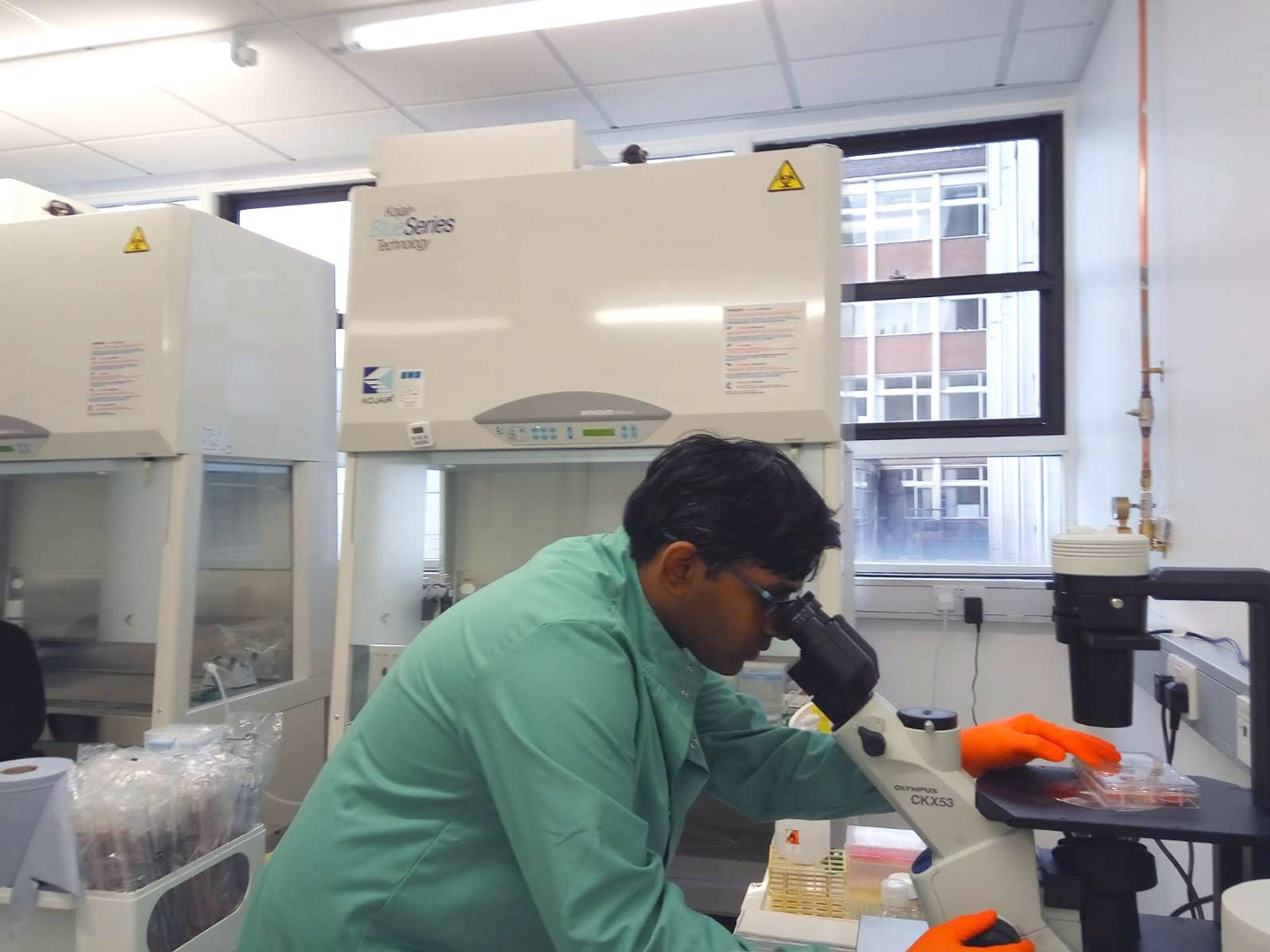
I'm in Cellular Platforms now, but I've worked with several different faculty teams over the past eight years using CRISPR. Initially, we used CRISPR at a genome-wide scale to understand how different molecular pathways work. We performed genome-wide CRISPR screens, knocking out one gene at a time in cell models and then studying how that affected cell behaviour. By seeing which pathways were disrupted – and whether we could rescue those effects – we learned how genes contribute to cellular processes. For example, by carrying out these screens during the differentiation of stem cells into neurons, we can identify the genes and pathways required for neuron development. That helps us better understand diseases such as Parkinson's and Alzheimer's, where neurons are lost. Similarly, in cancer, these screens help us identify mutations that drive tumour growth or influence cell survival.
More recently, we've combined these approaches with synthetic lethality screens. Here, we first knock out one gene using CRISPR and then identify other genes that the cell now depends on to survive. This helps us understand how genes work together and can reveal new targets for diseases such as cancer. Much of this work is led by Group Leader, Dr Mathew Garnett's team in the Somatic Genomics programme.

We've also previously used CRISPR in a very different way. Instead of switching genes off, we used modified CRISPR systems to switch genes on. By activating specific transcription factors, we were able to reprogramme differentiated cells back into pluripotent stem cells (undifferentiated cells able to self-renew) and investigate which genes accelerated that process. This work was primarily led by former Senior Group Leader, Dr Pentao Liu.
We're also currently using CRISPR not just to cut DNA, but to introduce precise genetic changes to study the effects of human variants. Through the Multiplexed Assays of Variant Effect (MAVE) programme, we’re systematically replacing individual DNA letters across protein-coding regions and measuring how those changes affect cell function. The way we do this is by making a precise cut with CRISPR and providing the cell with a repair template containing the specific variant we want to introduce. By repeating this across hundreds of positions, we can build a map showing which variants are harmless and which disrupt gene function. That information helps us interpret the clinical significance of genetic variants and improve our understanding of disease risk.
RELATED SANGER BLOG
Building an atlas of gene variants to understand health and disease
Mutational scanning technologies are revolutionising the way we understand human genetic variation. In July 2023, researchers from over 50 countries gathered to explore the possibilities of this incipient genomic method, and how it can benefit clinicians and patients.
At the moment, these studies are carried out in haploid cell lines, which contain only a single copy of each gene, making it much easier to measure the effect of individual variants. Extending this work to more complex human cell models will be an important next step, and I think this is where AI will play a major role – helping us predict the effects of variants that are difficult to study experimentally.
This work is being delivered through MAVE Operations within Cellular Operations, in close collaboration with research groups led by Director, Professor Matthew Hurles and Head of the Somatic Genomics programme, Dr Dave Adams, alongside international collaborators in the US and Germany. Together, these collaborations are helping to generate comprehensive experimental datasets that improve the interpretation of human genetic variation.
Now, we've also had the opportunity to work with prime editing, which is one of the newer CRISPR technologies developed over the last few years. It combines a Cas9 nickase, reverse transcriptase (enzyme that converts RNA into DNA) and a specialised guide RNA (pegRNA) to introduce precise edits without requiring double-stranded DNA breaks or donor templates in many applications. It's a very powerful approach and has the potential to make genome editing even more precise and efficient.
How Prime Editing enables precise DNA changes
Use the arrow on the right (or left) to go forwards (or backwards) through the process.

prime_editing_landscape
1. The first element is a reverse transcriptase enzyme bound to a Cas9 nickase enzyme. The second element is a strand of RNA known as prime editing guide RNA (pegRNA). Images credit: Laura Olivares Boldú / Wellcome Sanger Institute

prime_editing1
2. Cas9 and pegRNA form a complex. Images credit: Laura Olivares Boldú / Wellcome Sanger Institute

prime_editing2
3. The pegRNA binds to the target DNA sequence. Images credit: Laura Olivares Boldú / Wellcome Sanger Institute

prime_editing3
4. Cas9 nickase enzyme cuts one strand of DNA. Images credit: Laura Olivares Boldú / Wellcome Sanger Institute

prime_editing4
5. Primer binding site binds to the DNA flap. Images credit: Laura Olivares Boldú / Wellcome Sanger Institute

prime_editing5
6. Reverse transcriptase synthesises DNA using the RNA template. Images credit: Laura Olivares Boldú / Wellcome Sanger Institute

prime_editing5b
7. Resulting DNA has one edited strand and one unedited strand. Images credit: Laura Olivares Boldú / Wellcome Sanger Institute

prime_editing6
8. The cell's machinery resolves the conflict between edited and unedited strand by picking one of them. Images credit: Laura Olivares Boldú / Wellcome Sanger Institute
Where do you see this heading in the future?
I think, for now, biology is still driven by careful experimentation. Before AI can fully transform the field, we need high-quality functional genomic datasets to train it on. That's exactly what we're generating now using new technologies, such as genome-wide CRISPR screens and MAVE.
Rather than replacing experimentation, these models will increasingly complement laboratory research by helping prioritise variants, predict functional consequences and guide the design of future experiments. Earlier genome-wide screening datasets contained more experimental noise because the technology was still developing. The data we're generating today is much more accurate and reproducible. With these richer datasets, AI will be able to build better models of how the genome works and make much more reliable predictions about the effects of genetic changes.
RELATED SANGER BLOG
Nine billion and counting
The Atlas of Variant Effects Alliance celebrated its fourth year in 2024. A collaboration of multiple institutes it has the aim of assessing the effects of all variants in our genomes. Read about the Alliance's achievements and the diverse community underpinning such a colossal effort.
I think we're much closer than we were even five years ago to treating genetic conditions. There are really two parts to that. The first is identifying the genetic changes causing the condition, which has been made possible by remarkable advances in DNA sequencing. The second is correcting that change, and that's where CRISPR-based technologies come in. We're already seeing the first wave of CRISPR-based therapies entering clinical practice for certain inherited conditions, while many others are being tested in clinical trials – I think this is only the beginning.
Sanger is in a unique position because we have both the technologies and the expertise to tackle these questions at scale. Across the Institute, different research groups are tackling complementary aspects of genome biology. For example, Dr Mathew Garnett's team uses large-scale CRISPR functional genomics to identify cancer vulnerabilities and therapeutic targets. Professor Matthew Hurles' group investigates the genetic basis of rare and developmental disorders and works to improve the interpretation of human genetic variation. Meanwhile, the Generative Genomics programme, led by Professor Ben Lehner, combines functional genomics with AI to develop predictive models of genome function, and understand how both coding and non-coding variants contribute to human biology. By bringing these complementary approaches together, we're building an increasingly comprehensive understanding of genome function and disease, and I think that’s what makes Sanger such an exciting place to be.


