


Image credit: Anna Vathrakokoili Pournara.
Red, itchy, unpredictable – eczema is more than just a skincare issue. It is a chronic inflammatory condition that affects people’s day-to-day lives. We explore what it is, what remains unclear and how researchers at the Wellcome Sanger Institute are getting beneath the surface to find out more.
Eczema is not just dry skin – it is a complex, often misunderstood condition that affects approximately 10-20 per cent of children and 2-10 per cent of adults worldwide.1 It is not a one-size-fits-all condition; for some, it is an occasional irritation, for others, it is a daily challenge characterised by itching, discomfort and visible changes to the skin. The causes and symptoms are varied and shaped by a number of factors including genetics, environment and the immune system. Understanding this diversity is key to not only manage the condition, but to improve how we talk, treat and support those living with it.
At the Sanger Institute, Dr Anna Vathrakokoili Pournara, Postdoctoral Fellow, and colleagues in Professor Muzz Haniffa’s group are using a range of genomic tools to better understand this condition – quite literally, from the inside out. In our latest blog, we spoke with Anna to explore eczema in more depth, the challenges it presents and how genomics is helping to unravel its complexity.
What is eczema? What is our current understanding of what causes it?
Eczema – also known as atopic dermatitis – is a very common condition. Although it presents most frequently in childhood, the condition can present at any age. In the UK, it affects 1.5 million adults with no apparent difference in prevalence across sex and ethnicity.2,3
The most common sign of eczema is red, dry, itchy skin. Interestingly, the location of eczema is very age dependent. For some individuals, when they are a child, it presents more commonly on the face, creases of the elbows and behind the knees, and then in adulthood, it presents more frequently on the neck, palms and eyelids. We don’t exactly know why this happens, but we know it is a very complex disease involving several genetic and environmental factors.
“There is no single cause that has been identified... but there can be a genetic link...”
There is no single cause that has been identified. However, we know that there is both immune dysfunction and epidermal dysfunction in the skin. Eczema can run in families, so we also know there can be a genetic link, but it is not like a monogenic disease where one gene causes the condition – it is a lot more complex than that. There is evidence that mutations in the gene that produces the filaggrin protein is a major factor in eczema cases. This protein is critical in maintaining the skin’s protective barrier, so reduced production can make the skin barrier more vulnerable, leading to dryness, inflammation and increased exposure to allergens and other environmental exposures. This can also cause the immune system to react. We know from research that there is a lot of crosstalk between microbes and your skin. People with eczema usually have less microbial diversity and a more prominent abundance of the bacterium Staphylococcus aureus. This covers the whole skin and causes a lot of the reactions and flare-ups that people with eczema suffer from.

What are the current treatment options? What do these treatments aim to target?
Eczema does not have a cure – it is currently dealt with by managing symptoms and/or targeting the immune dysfunction. There are mild, moderate and severe cases of eczema, and the way you treat it will depend on the severity. Mild cases are typically treated with topical creams, such as emollients, that will help moisturise the skin and make sure that it is not dry as this can cause the skin to break. Topical corticosteroids, such as hydrocortisone, are used for flare-ups only and cannot be used long term. For moderate to severe cases, we also have systemic treatments now that are more targeted. For example, JAK inhibitors and biologics like dupilumab, and traditional immunosuppressants such as methotrexate.
These types of treatments target inflammation, which is one of the main hallmarks of eczema. JAK inhibitors act by blocking the JAK-STAT signalling pathway, which plays a key role in driving inflammation. Dupilumab is a monoclonal antibody that targets a receptor on immune cells where the cytokines IL-4 and IL-13 bind, preventing these cytokines from activating inflammation and ultimately reducing signalling through the JAK-STAT pathway. Methotrexate works more broadly by inhibiting the activity of rapidly dividing immune cells; thereby, reducing overall immune-driven inflammation. While these therapies have been successful in many patients, not everybody responds. When your eczema is really severe, you often end up cycling through lots of different treatments. You might respond for a while, and then stop the treatment because you’re feeling better – but then it comes back.
“While these therapies have been successful in many patients, not everybody responds.”
Side effects are another issue. If you have a serious adverse reaction, like severe infection or other important organ effects, you’ll be advised to stop that treatment and move on to something else. So, for some people, it becomes a cycle – trying different treatments without ever really getting long-term control. That is what we are trying to understand with our study.
What questions still remain?
One of the key questions in eczema is: now that we have these systemic treatments – and given how important it is to manage more severe cases – how can we identify, as early as possible, who is most likely to respond to a given treatment? If we can detect differences in the transcriptome or in the abundance of specific cell types that predict response – either before treatment or within the first few days or weeks of starting treatment – this would be extremely valuable for guiding treatment decisions sooner rather than later for patients.
“How can we identify, as early as possible, who is most likely to respond to a given treatment?”
In terms of research, we have focussed a lot on the inflammatory response, why that happens and how we can manage it. But I think bringing in the genetics and understanding more about the root causes of the condition will help us find better treatments that are more targeted. This has been very successful in cancer research – we know that treatments that are based on genetics are more likely to be effective with less side effects. And eczema is so diverse, so classifying patients in this way makes sense. This is what we call endotypes, so not just grouping patients based on age or severity but understanding what is different in their genetics or immune system that makes them respond better to a certain treatment versus another.
What are you working on to help deepen our understanding of eczema?
We’re part of the BEACON clinical trial as the mechanistic arm, working to understand how different treatments work, distinguish between responders and non-responders, and use that data to start making predictions about treatment outcomes. This is a big collaboration including Professor Muzz Haniffa’s group at Sanger and an expert clinical team at St John's Institute of Dermatology and King's College London. What makes BEACON different from most clinical trials is that, alongside standard clinical assessments, we are also using single-cell and spatial technologies to understand what is happening at a cellular and tissue level in much greater detail.
The trial involves patients with moderate to severe eczema, who are on either methotrexate, dupilumab or JAK inhibitors. We are collecting blood and skin biopsies at different time points: before treatment, three days after treatment, 14 days after treatment and 12 weeks after treatment. On these samples, we’re performing single-nuclei RNA sequencing and spatial transcriptomics – led by Dr April Foster, Senior Staff Scientist in the lab. This will give us single-cell-resolution data across multiple time points, allowing us to track how the skin changes from before treatment to after. We’ll be able to see how the disease resolves in people who respond well to treatment, and how it either persists or fluctuates in those who don’t.
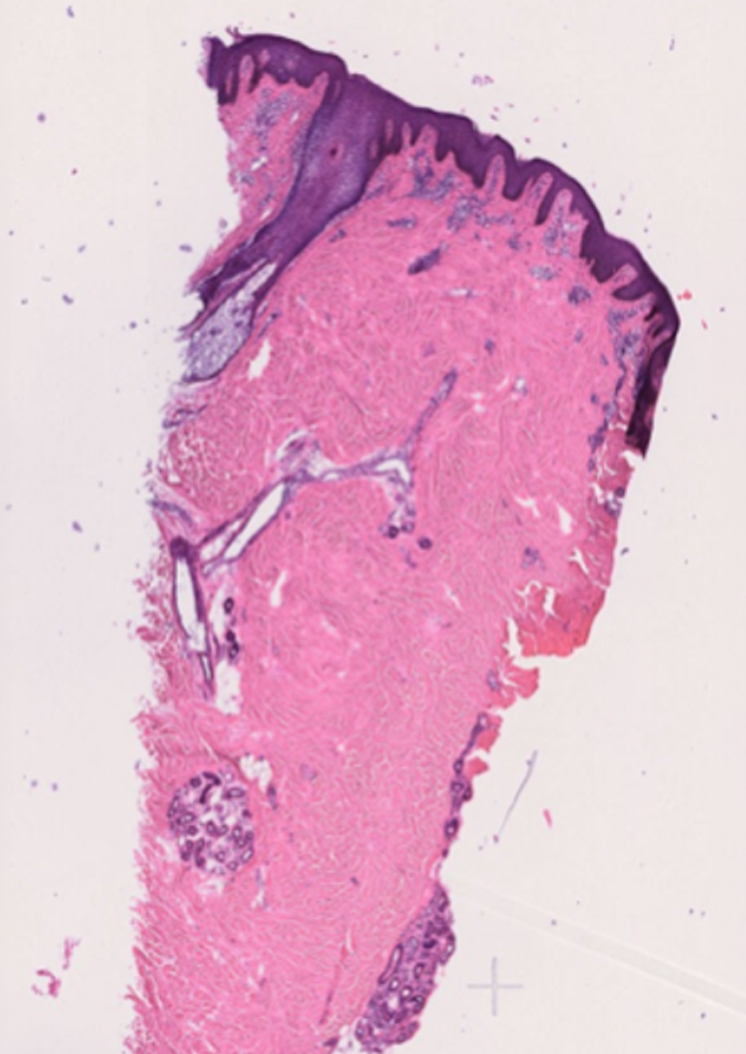
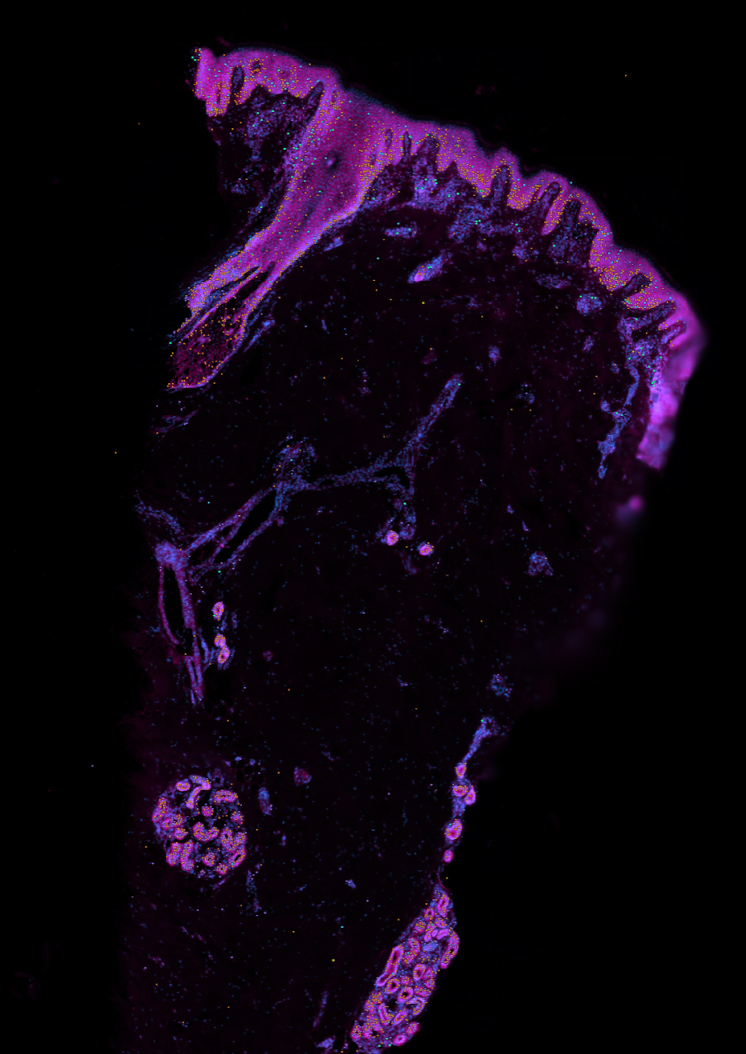
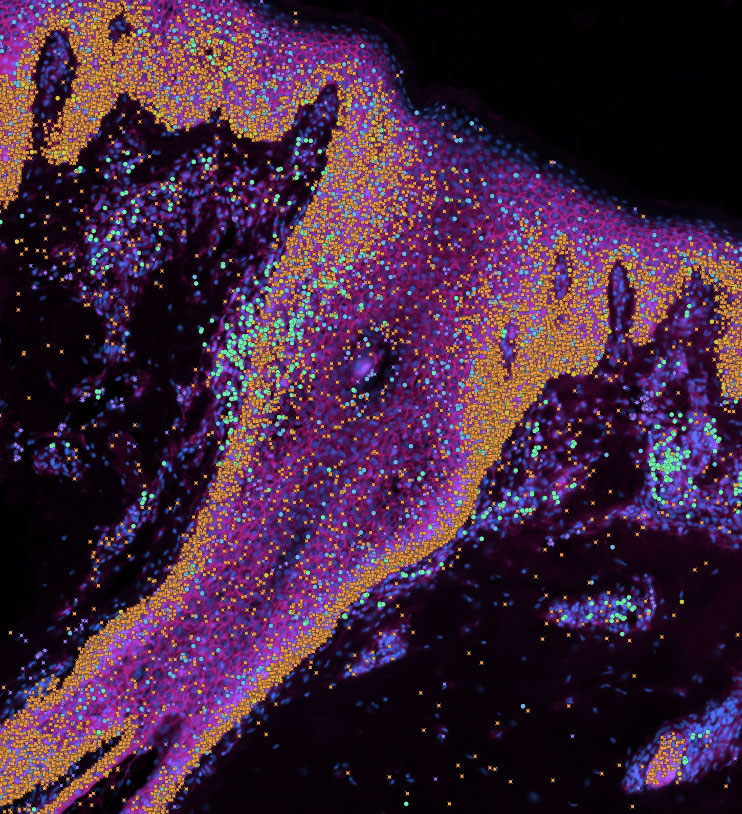
Left: A standard light microscope H&E (Haematoxylin and Eosin) stain of human skin as used in healthcare clinics for histology assessment. Middle: A Xenium spatial transcriptomics image of the same area of human skin. Right: Close up of the skin using Xenium spatial transcriptomics. Key to cells revealed: Cyan = stem cells, Orange = keratinocytes, Green and purple = immune cells, Yellow = melanocytes. Images credit: Haniffa Group / Wellcome Sanger Institute.
So far from other studies, we know that lesional skin – areas that have visible eczema – might not be that helpful in predicting if you're going to respond to a treatment or not. Using data from these early time points, we aim to determine whether features observed in the skin or blood can predict an individual’s likelihood of response. This would then allow you to stop a treatment early on and switch to a different one, which will be very transformative for patients and very cost effective for healthcare systems.
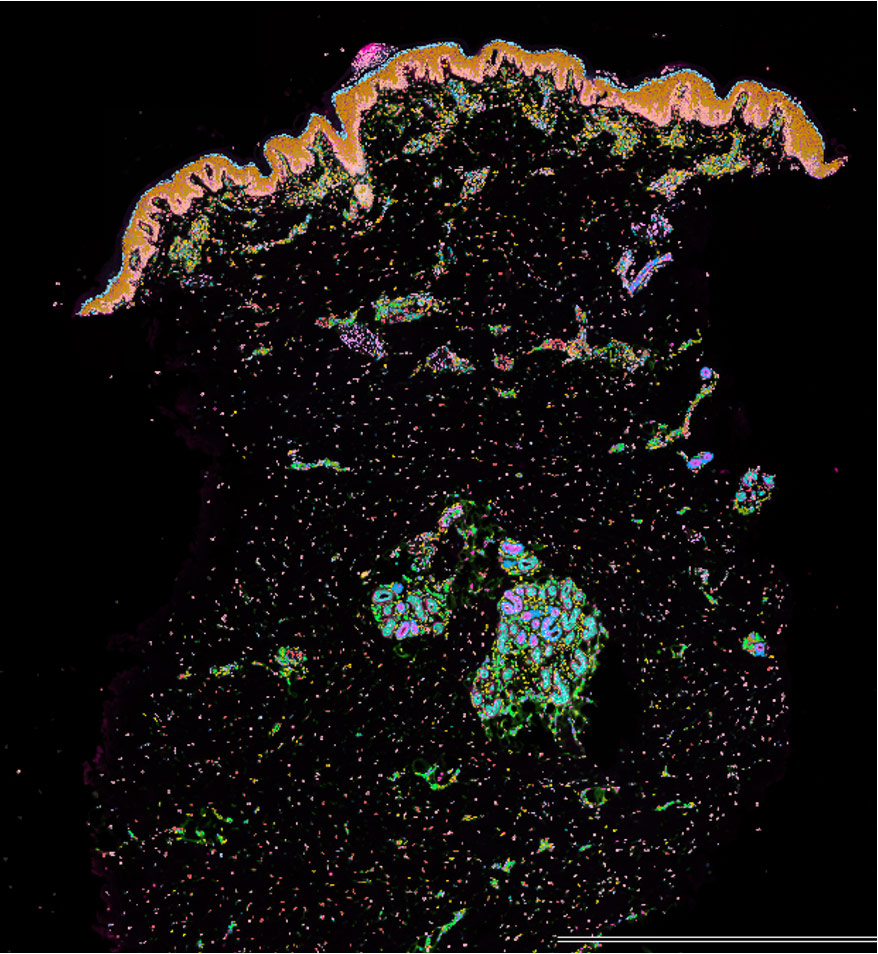
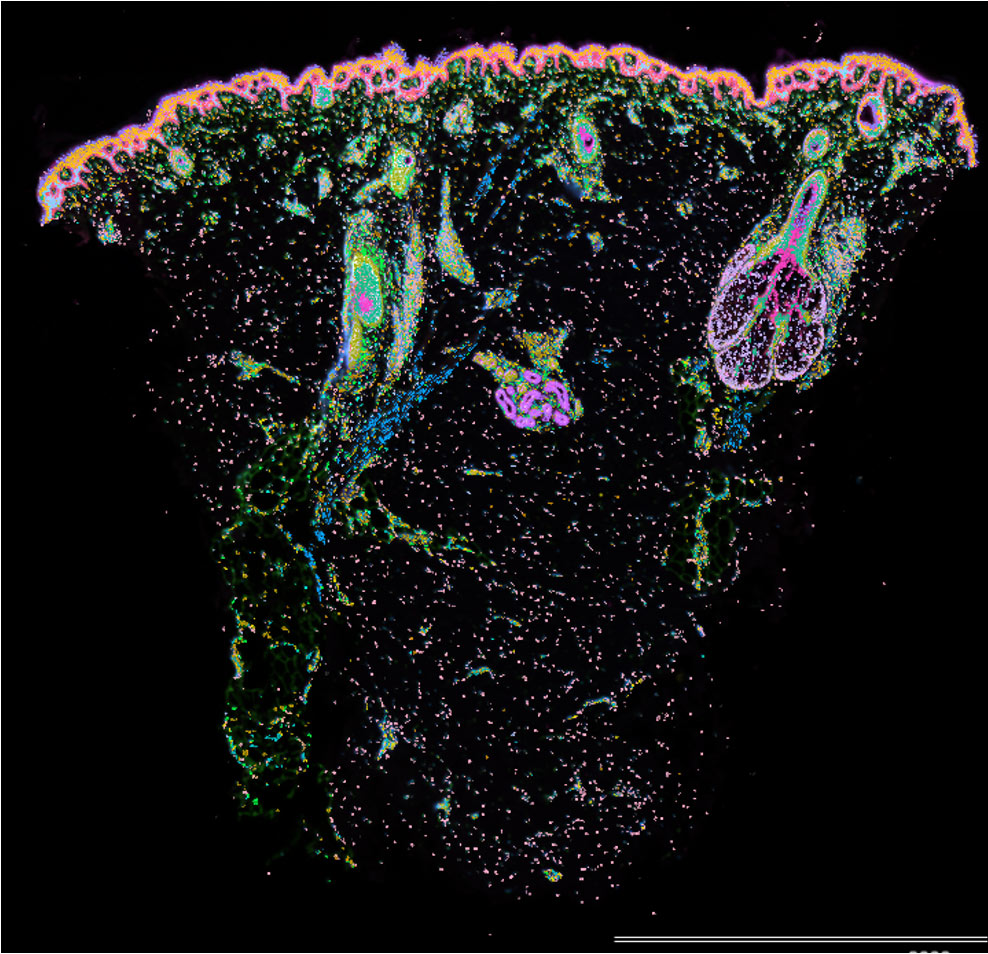
Xenium images of human skin demonstrating the different cell types. Image credit: Haniffa Group / Wellcome Sanger Institute.
We’re still early in the project, but even after just three days of treatment, the skin shows transcriptomic changes, even if symptoms haven’t yet shifted – showing that the drug starts working very quickly. If we can then see what is different at that time point between responders and non-responders, that could provide potential biomarkers of response or not to a certain treatment.
Even in those whose skin improves; it is still more vulnerable than healthy skin. Inflammation is reduced, but some immune cells remain, and they might be ready to react when the treatment is removed. This is one of the things we are also really interested in: what does the treatment not resolve. Dr Lloyd Steele, Wellcome Clinical PhD Fellow in our lab, is working on a large spatial transcriptomic dataset and has observed novel disease-specific tissue niches that have not been previously described. One of our hypotheses is that these treatments don’t fully eliminate the immune cells in the skin, so when treatment stops, the cells can proliferate again, bringing inflammation back to the skin.
I’m also working with chromatin accessibility data, which shows which regions of DNA are open or closed and which genes can be switched on. Along with genetic factors, there may be an inflammatory ‘memory’. Treatment may block pathways, but some regions stay primed, ready to reactivate inflammatory genes when treatment stops. This may explain why flared skin is hard to fully resolve.
“Along with genetic factors, there may be an inflammatory ‘memory’... This may explain why flared skin is hard to fully resolve.”
The next thing I’m really interested in is bringing genetics into the picture – understanding the genetic basis of eczema. We now have powerful methods and datasets combining many types of information, but the genetic layer – the foundation where it all begins – hasn’t been fully integrated. I was recently awarded a grant from the National Eczema Association to study how genetics manifests in different skin cell types. For example, how loss of function in the filaggrin gene affects keratinocytes, the main cells in the outer skin layer. One of the main goals of the grant is to combine single-cell RNA sequencing with large genome-wide association studies to identify which cells carry genetic risk for eczema, helping us pinpoint the cells driving the disease. We can then use these data to map gene regulatory networks – essentially how transcription factors switch genes on or off. By building these networks, we can see how they function in healthy skin and how they become disrupted in eczema.
We would then take key transcription factors from these networks and test them experimentally. Using our skin organoid model in the lab, we can knock out these factors and observe what happens in a controlled system. This will allow us to see, in a more complex skin model, how disrupting specific parts of the network affects the skin. Ultimately, the goal is to model the disease in vitro and better understand the mechanisms driving it. For example, we know that pathways like IL-4 signalling or the JAK–STAT pathway are dysregulated in immune cells in eczema. We think there may be similar kinds of regulatory networks within skin cells themselves. By exploring these networks, we can start to understand how different cell types contribute to the disease – and how they communicate with each other. That opens the possibility of targeting specific cell types, or even the crosstalk between them, to better manage the condition. This could help us identify more precise, targeted pathways for treatment.

How do you see this area of research changing over the next 10 years?
What I really hope we can do is make sure patients get the right treatment as early as possible, without having to go through these frustrating cycles of trial and error to find what works. It is challenging for both patients and clinicians, and it would make a huge difference if we could predict that response early on. It will not be easy, but a lot of researchers are working towards this. Hopefully, we’ll reach a point where patients can come into the clinic and be matched with the most effective treatment straight away.
“ Hopefully, we’ll reach a point where patients can come into the clinic and be matched with the most effective treatment straight away.”
In terms of research, I think that we have really exciting cutting-edge technologies coming. For example, we can now do spatial transcriptomics for the whole transcriptome, so not just looking at certain genes, but actually looking at your whole transcriptome on a slide. This will make us understand why the disease is so diverse across different sites and across different people. We won’t just be looking at numbers and data – we’ll also have a visual picture of what’s happening, which I think is really important. Then, by combining multiple types of data and using AI to connect everything from DNA to RNA to proteins, we can start to understand how these different layers interact. The hope is that this will guide the development of new, more targeted treatments.
Find out more
- Dr Anna Vathrakokoili Pournara's profile
- Professor Muzz Haniffa's profile
- The BEACON clinical trial
- Dr April Foster's profile
- The National Eczema Association
References
- National Eczema Association. Eczema Facts [Last accessed: March 2026]
- National Institute for Health and Care Excellence. Eczema – atopic: How common is it? Last revised: March 2025 [Last accessed: March 2026]
- Change AD. What is atopic dermatitis [Last accessed: March 2026]


