


Image credit: Imogen.
Inflammatory bowel disease (IBD) looks different for everyone who has it. We spoke with medical student, Imogen about her personal experience of living with IBD, how it has influenced her career path and how new research from the Wellcome Sanger Institute brings her hope.
Over half a million people in the UK are thought to be living with Crohn’s disease and ulcerative colitis1 – the two major forms of inflammatory bowel disease (IBD). These are painful, debilitating and lifelong conditions with no known cure. They cause inflammation in the gut, and the course of IBD is very unpredictable.
Each and every one of those half a million people will have a different experience of the disease. Some will have mild symptoms that are managed with medication, whereas for others, they will need multiple surgeries and the disease will severely impact their lives on a daily basis.
Growing up with Inflammatory Bowel Disease (IBD)
IBD is a highly diverse condition, and no two people experience it in the same way. Imogen is 26 and in her first year of medical school. She first got ill at the age of 13, when she started passing blood in her stool and experiencing urgency to go to the bathroom, abdominal pain, diarrhoea and very bad fatigue.
Imogen recalls: “I initially didn’t tell my parents as I was embarrassed, but it got to the point where I was so ill, they got the GP involved and I ended up on the children's ward in Addenbrooke's Hospital. Then I was diagnosed after some investigations.”

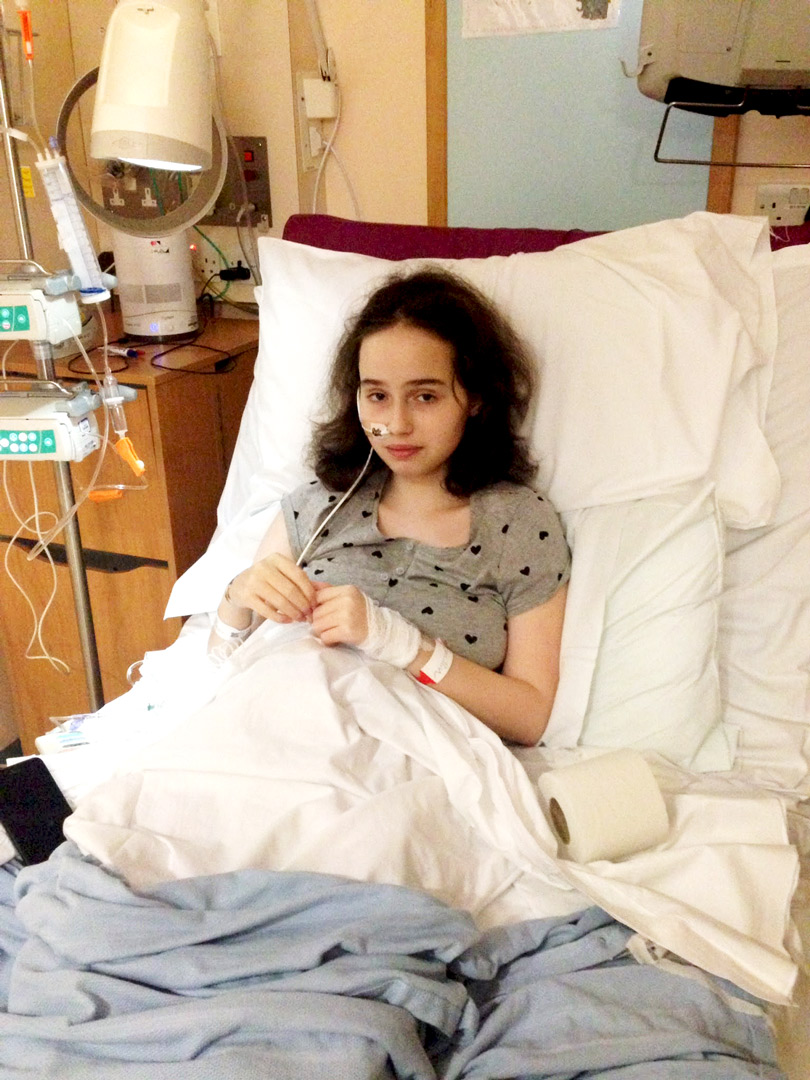

Images credit: Imogen.
Imogen was originally diagnosed with atypical ulcerative colitis in 2013 – which deviates from the usual histological features seen in ulcerative colitis. It is a long-term condition where the colon and rectum become inflamed and small ulcers can develop on the colon’s lining, which can lead to bleeding. In ulcerative colitis there is a predictable, continuous pattern of inflammation in the colon that extends upwards from the rectum, with no healthy tissue in between. Whereas in atypical ulcerative colitis, the inflammation is patchy, with some healthy tissue in between, making it difficult to distinguish from Crohn’s disease.
People with ulcerative colitis may have recurring diarrhoea and tummy pain, while feeling extremely tired and losing their appetite. For most people, like Imogen, it can have a significant impact on their daily lives.
After her atypical ulcerative colitis diagnosis, Imogen underwent major surgery to remove her entire colon – known as a total colectomy. Following this, she was fitted with a stoma bag as a temporary measure so she could finish her GCSEs and A-levels, and was mostly free from symptoms during those years.
As the total colectomy was meant to have 'cured' her ulcerative colitis, Imogen wanted to have the stoma bag reversed before going to university. For this, she had additional surgeries, including one to create a J-pouch – an internal reservoir created from the small intestine. But, unfortunately, these major surgeries did not fix her symptoms and there were complications.
“I got the J-pouch and started experiencing severe symptoms again. I lost a lot of weight, and all the abdominal pain, urgency for the loo and diarrhoea came back.”
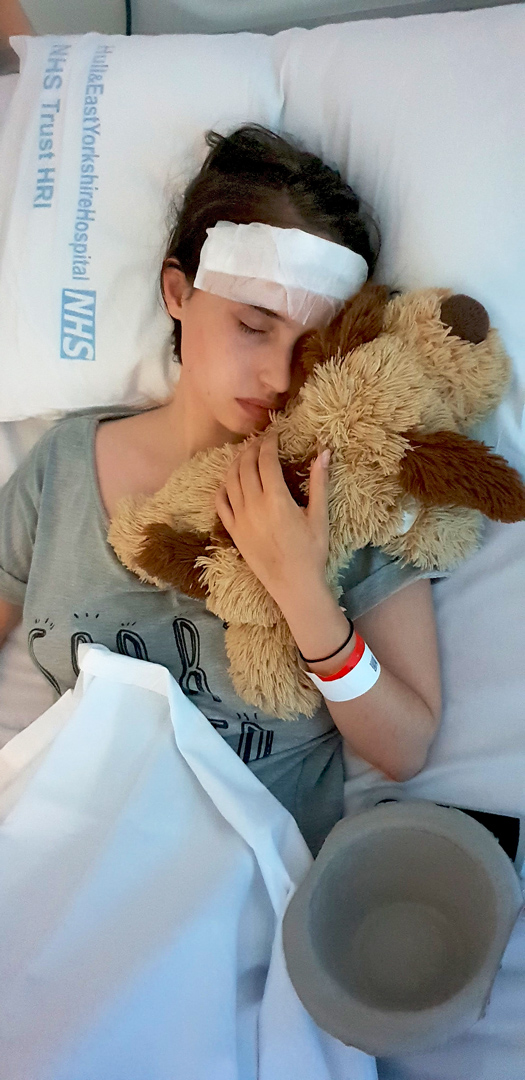
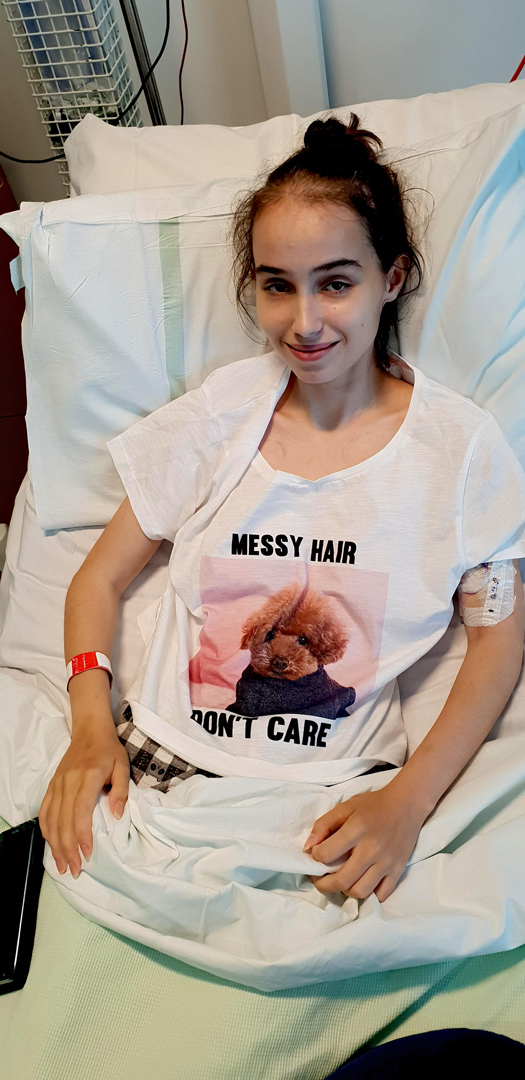
Images credit: Imogen.
It turns out that in 2019, six years after her original diagnosis, and after some more investigation, Imogen’s diagnosis was changed to Crohn’s disease – another form of IBD that is chronic and causes inflammation of the digestive tract, with similar symptoms to ulcerative colitis. This was why the stoma reversal and J-pouch surgeries did not resolve her symptoms as expected, but exacerbated them.
The new medication Imogen was prescribed took time to get working, meaning she needed additional minor surgery to manage her symptoms. A complication following surgery led to Imogen going into cardiac arrest, meaning she was in hospital for a large part of that year.
“It was disruptive when I was younger – I definitely felt ‘othered’ from my friends because I looked quite ill. My hair fell out from the medication I was taking, and I lost a lot of weight. I also missed a lot of school and could only attend about a third of the time. I did manage to get my GCSEs and A-levels in the end, but I had to take a gap year to have all those surgeries before I went to university.”


Images credit: Imogen.
Since then, Imogen has had other minor procedures but fortunately has not needed any further major surgery. Now, she manages her symptoms by taking immunosuppressant medication, which weakens the immune system to manage severe chronic inflammation.
“I’ve had to cycle through quite a few immunosuppressants because a lot of them haven’t worked or didn’t work for very long. One in particular, azathioprine, gave me a lot of side effects. It caused frequent infections, and quite bad hair loss. It affected my confidence a lot as I would be stared at in school, and I ended up getting a wig when I was 14. I was also on a high dose of steroids, which caused a lot of issues with the skin on my back thinning, so I still have large scars there. The drugs also caused insomnia, weight gain and moon-face, where fat accumulated on the sides of my face making it look round, which affected my confidence.
“Then I took injections for a while – I had a fridge at university and had them delivered. But then they stopped working, too. So now I’m on tablets, and hopefully they’ll keep working for a bit longer.”




Images credit: Imogen.
Imogen gets flare-ups every now and then, where her symptoms worsen, particularly around exams.
“Even though I don’t feel stressed, clearly I must be, because looking back at university, it was always around exam periods or deadlines that my symptoms would flare. I’d end up being ill and needing another minor surgery. And those are disruptive, you end up cancelling plans, missing trips and being a bit unreliable to friends and family around those times.”
As well as taking immunosuppressants, Imogen takes semi-regular or sometimes long-term courses of antibiotics when she feels like her symptoms are flaring up.
“I have a stash of antibiotics that I start myself when I need. Those can be quite tricky as they cause a lot of nausea. I also have an issue with ongoing anaemia, which is what currently affects my life the most with low energy and not being able to do exercise without getting very breathless, such as cycling to lectures. I am waiting for an iron infusion for that.”
Giving back to others
Living with Crohn’s disease has been a big influence on Imogen’s decision to study medicine at university. At first, she steered away from medicine after spending so much time in hospitals growing up. But after some space and time to think during and after her biomedical science degree at the University of York, she decided medicine was the path for her.

Image credit: Imogen.
“I’m currently in my first year of medical school and it’s really good. It’s weird being on the other side, seeing patients – I need to do a bit of a mental switch. When I’m meeting with gastroenterology patients, I can obviously relate to what they’re going through, but I can’t tell them about my experiences. It’s a bit of a battle where I wish I could say, ‘I can appreciate what you’re going through.’”
To deal with managing her IBD while doing such an intense medical course, Imogen has to really stay on top of her symptoms.
“A lot of it is being self-aware. Noticing when I am stressed or run down or ill, and not delaying contacting my team, or taking medications like antibiotics. There is a lot of admin involved with having a chronic illness, so I have to be very on top of prescriptions, blood tests and appointments. The university is also very good with their support services – I made sure to get in contact with them when I started so that plans were in place should I get ill.”

Image credit: Imogen.
And Imogen is looking forward to the next stage of her studies, where she will be spending her summer at a local hospital: “I’m excited to go on placement and be more involved in the wards. For 10 weeks over the summer, I will have the full immersion experience – speaking to more patients and learning more about the doctor’s side of consultations. I can’t wait.”
IBD does not look the same for everyone
From Imogen’s personal experiences, and from seeing patients, she describes how IBD does not look the same for everyone. In the past two years, her mother and brother have also been diagnosed with IBD, but they all have different experiences.
“People say you must do certain things, or shouldn’t be able to eat certain food, as if there’s one image of what IBD looks like – and really, it could look like anything. My mum and my brother also have IBD, and the three of us are completely different to each other. We have separate symptoms, different triggers. And it varies day to day as well – it’s so unpredictable.”
Genetics can play a role
To try and understand why people’s experiences of IBD differ, Sanger Institute researchers and their collaborators are turning to genetics. In the largest genetic study of IBD traits to date, scientists in Dr Carl Anderson’s group at the Sanger Institute have studied data from over 43,000 patients from more than 100 hospitals in the UK.
For the first time, the team has identified a combination of genetic variants within the HLA-DRB1 gene – known collectively as HLA-DRB1*01:03 – that is associated with more severe ulcerative colitis and Crohn’s disease. The HLA-DRB1 gene provides instructions for making a protein that helps the immune system distinguish between the body's own proteins and those made by foreign invaders, such as viruses and bacteria.
The team suggests that testing for this genetic marker – HLA-DRB1*01:03 – could help identify IBD patients at risk of severe disease, meaning they could be monitored more closely and given advanced therapies earlier.
“I cycled through a lot of medications that didn’t work... so the idea of genetic testing... and the personalisation of treatment, makes me hopeful.”
Imogen welcomes the new research: “It’s really exciting. I cycled through a lot of medications that didn’t work, or stopped working, so the idea of genetic testing to find people at high risk of severe disease, and the personalisation of treatment, makes me hopeful. I feel really positive about it.”
Hope for the future
Genetic research into IBD is beginning to uncover how the disease works and give possible explanations for why it varies so much between people. While there is more work to be done to fully understand this, future genetic testing could revolutionise the way patients are treated, opening the door to personalised medicine.
While Imogen has had a difficult time growing up with IBD, her experiences have influenced her choice of career path and her desire to give back to others. With research into IBD progressing all the time, she is excited about the future medical developments that will be available for when she is treating patients down the line.
“Having Crohn's is one of the main reasons I decided to go into medicine.”
“Having Crohn's is one of the main reasons I decided to go into medicine – I had some amazing doctors growing up who made a big difference to my life, and I want to do that for others. I've also realised that medicine is limited by the knowledge that is available. When I was first diagnosed, there was so much we didn't know about IBD and that led to a lot of difficult years.
“I’m happy that the research and knowledge around Crohn’s disease is still evolving. Seeing new research like this is exciting as it could really change the trajectory of someone's illness – avoiding the trial-and-error treatment approach that can lead to having extra surgeries and life being put on hold. If the correct treatment could be identified earlier, it could save a lot of time and suffering for people living with IBD. I really hope research like this informs medical practice – it’s exactly the kind of approach I look forward to using once I qualify!”
Find out more
- If you have been affected by IBD, you can access more information and support at Crohn’s & Colitis UK.
- Read more about the new genetic marker that is associated with more severe ulcerative colitis and Crohn’s disease.
Reference
- ‘New research shows over 1 in 123 people in UK living with Crohn’s or colitis’. Crohn’s & Colitis UK. [Accessed March 2026]


