


Image credit: Greg Moss / Wellcome Sanger Institute.
Histologists are the people who make the invisible visible. While their work often happens quietly behind the scenes, it is essential to everything from basic biology to scientific breakthroughs. These are the unsung heroes of the lab – and Yvette Hooks, Senior Technical Specialist at the Wellcome Sanger Institute, is no exception.
Histology is the study of tissues at the microscopic level and is critical to research, relying on technical skills and interpretive expertise to reveal how structures underpin function. After years spent peering down microscopes, Yvette has seen just about everything, working hands-on with animal and human tissues, and sharing her knowledge with both junior and senior colleagues. With experience that spans species and systems, Yvette walks us through how her passion, personality and precision help turn any slice of tissue into an insight.
What is your day-to-day like as a Senior Technical Specialist?
As everyone will probably say, every day is different – and I personally work with lots of different species, so it really is. A typical day for me would be sorting through emails, attending meetings with the scientists and doctors, and advising other people at the Institute about histology. I have meetings with people across America and Europe because there are not many people that have done histology for laser capture microdissection. This is a technique used to isolate specific cells or regions from a tissue section under microscope.
I also carry out my routine work, which involves processing a relatively high throughput of samples. On some days, I could end up cutting around 400 sections. The majority of the samples that come in are human – from organisations all over the world – but we've also got different animal samples so we can study across species. We also have a PhD student, Bernadeta Rupainytė, who will be working on plants, so I have already had a go at cutting an oak leaf from one of the trees around Sanger to practice. There is a different skill set for doing each of these samples – it is different types of histology. Today, we've been working on human kidney samples and human oesophagus and stomach, but last week, my colleague was working on heart, liver, skin, thyroid and epididymis tissue from rhesus macaques. As I said, every day is different.

What would you say are your strongest skills?
I would say one of my best skills is the fact that, having been in this business for 47 years, I've got lots of experience in recognising the different tissue types. There are so many different tissue types in the body. When I first started in the industry, one of the main animals that I studied were monkeys. So, because I have extensive experience working with non-human primates, and their tissues are very similar to human tissues, my skills are directly applicable to human tissue studies. I'm very good at tissue recognition from all different species.
Also, I have a lot of experience working in a high throughput histology lab; I can turn things around quickly. For example, when it comes to sectioning embedded samples onto a slide – tissue that has been stabilised in a paraffin wax so it can be cut into ultra-thin slices for microscopy – I can do about 300 sections a day.
I think the other thing that helps me, which is not really so much work related, is my personality. I get on with all the PhD students; I know all about them – their favourite food, partners, etc. I spend so much time with them in the labs and it is nice because we help each other. Often, they will help me with the manual bits so I can work on more of the technical stuff.
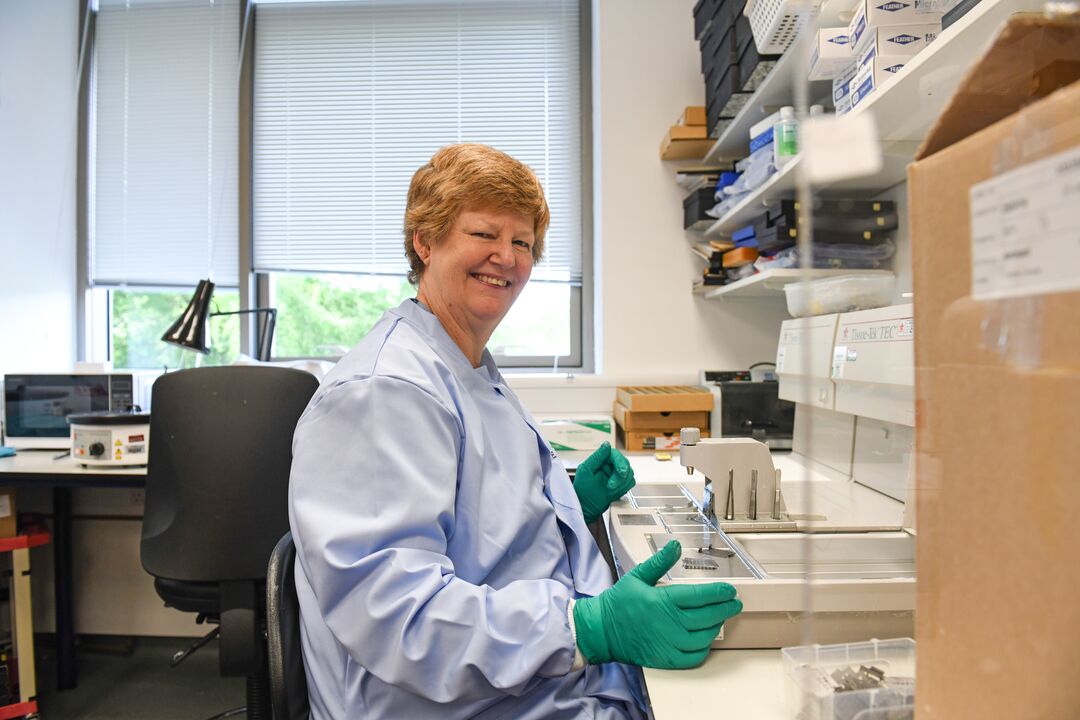
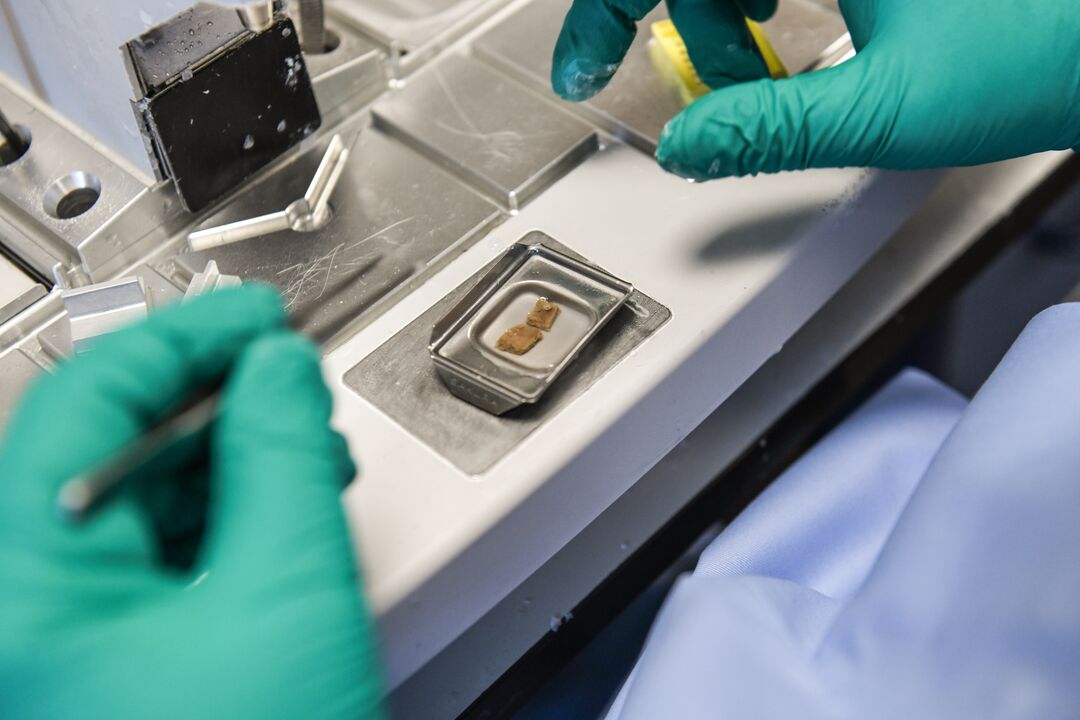

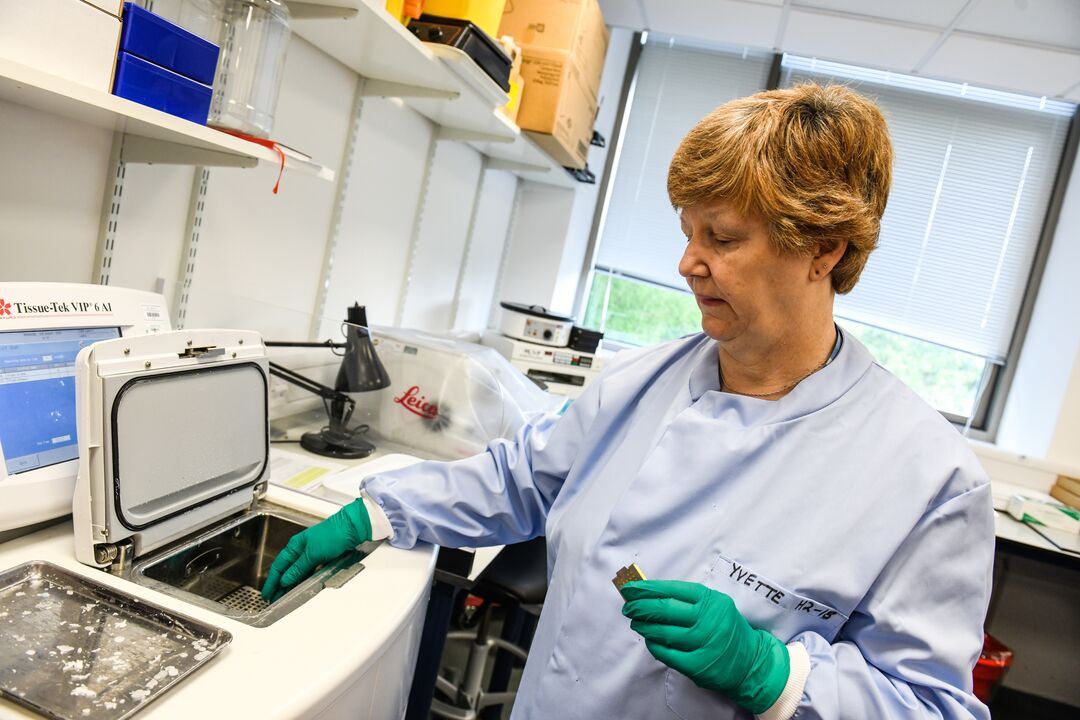

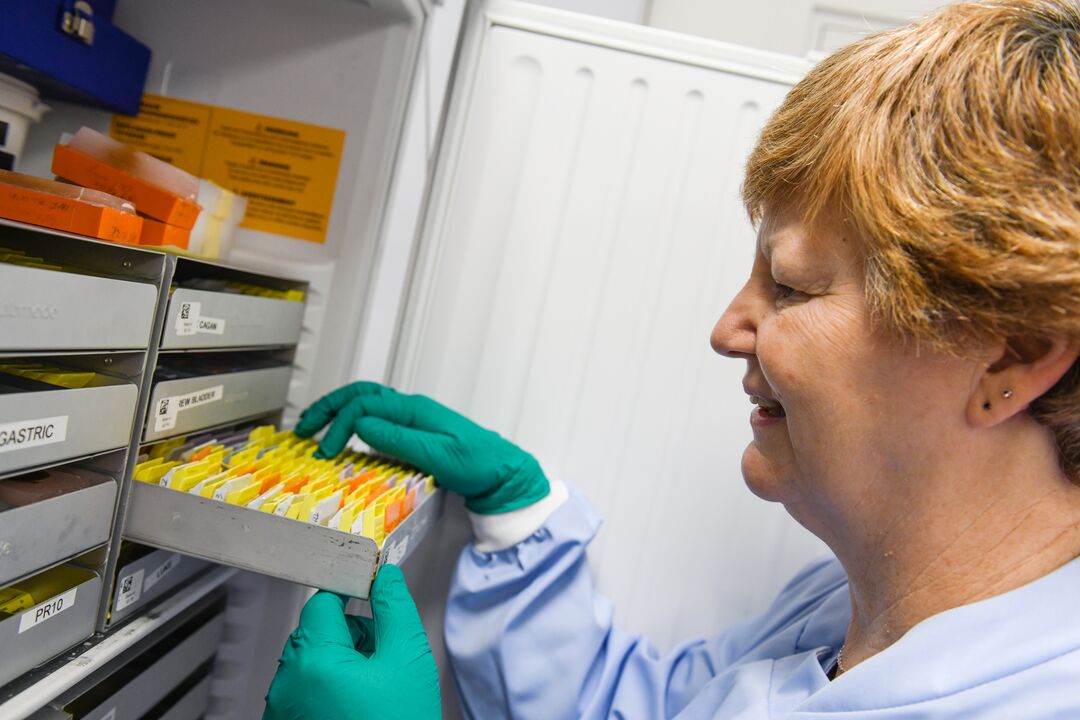


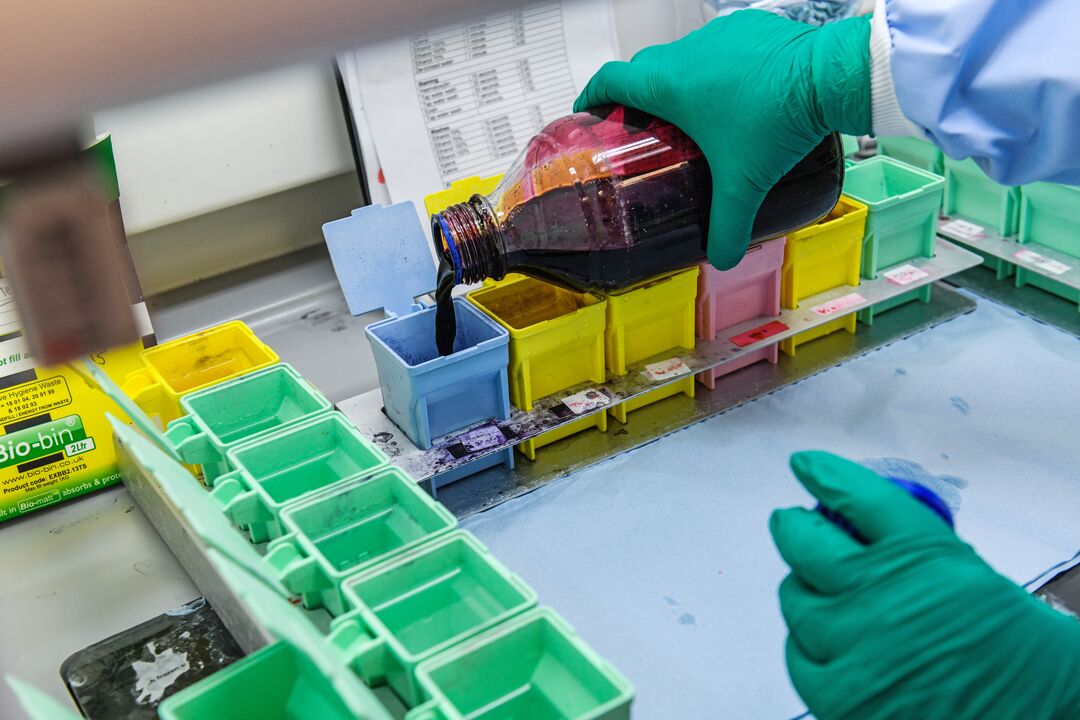
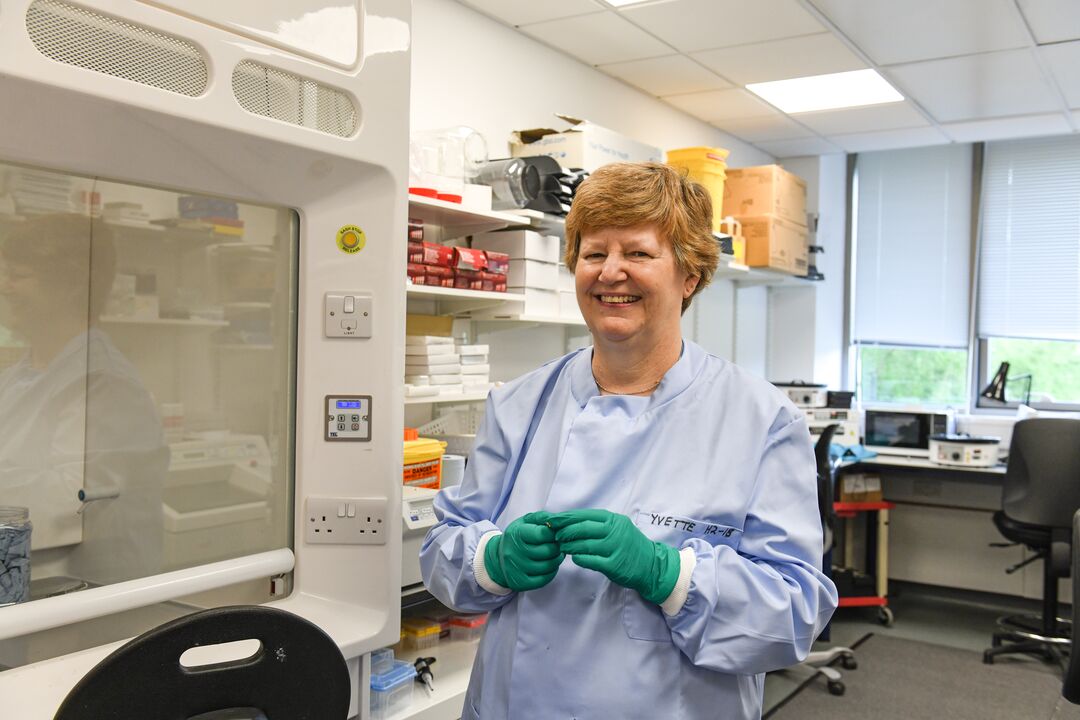
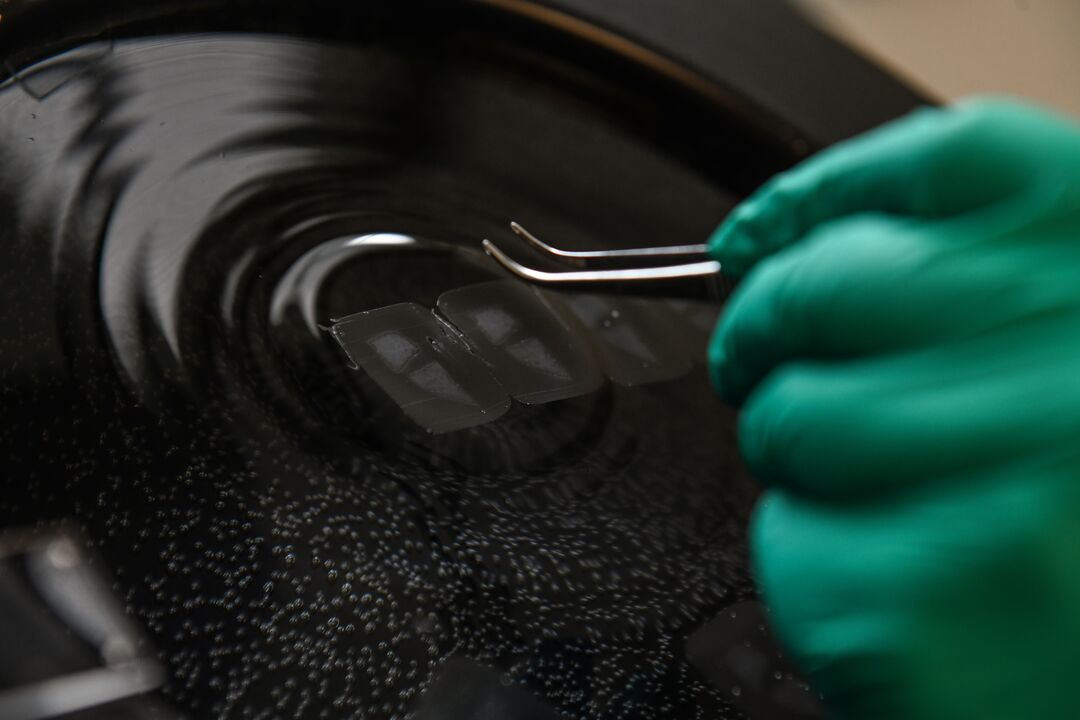

Yvette at work in the laboratory, preparing samples by fixing them in paraffin, making thin slices and floating them on to glass slides, before staining them ready for imaging and analysis. Images credit: Greg Moss / Wellcome Sanger Institute.
What is your background?
I did not do a university degree; I did an Ordinary National Certificate (ONC), which is considered equivalent to A-Levels in the UK. I also did a Higher National Certificate (HNC), which is equivalent to a bachelor’s degree but more practical oriented. During my ONC, I did one day a week at Chelmsford College and the other four days I worked at Life Science Research. I think that gave me lots of my experience. Because you learn a lot from the people you work with; my friend was the one that taught me all the different tissues and the way to orientate them. She didn't have any formal qualifications – she just learnt on the job. The company decided to move from Essex up to their other site in Suffolk, and they set up a histology lab there. We had to train people up to do histology. I worked there between 1978 to 1985.
I then moved up to Cambridgeshire at Huntingdon Life Sciences. This is when I did my HNC and studied Medical Laboratory Science – histology was one of the main subjects. I did three days every other week at Anglia Ruskin University and Addenbrooke’s Hospital. I was lucky because it meant my company paid for everything, so I didn't have any university fees to pay.
When I was there, I got promoted to a Senior Histotechnologist and I had three teams of about 10 people reporting to me. Then it all came to an end because they decided to close the histology unit down at Huntingdon. After this, I worked at Cambridge University for six years as a Senior Research Technician before I came to the Sanger Institute just over 20 years ago. When I was at Cambridge University, I worked for three years in the Department of Oncology, and then three years in the Brain Repair Centre, where we did work on Huntington's and Parkinson’s.
RELATED SANGER BLOG
The architecture of disease
Our photo essay goes behind the scenes of THE Sanger Institute's cutting-edge cancer research. Using genomic techniques to discover the DNA sequence and structure of millions of individual cells, our researchers are uncovering the genetic architecture of disease

How did you end up here at Sanger?
Sanger has a good reputation. In 2005, I found out that they were setting up a histology lab here, and so I applied. I didn't get that job, which was disappointing. But then I got a phone call from one of the people that interviewed me – Tony Warford – and he said, “Sorry, Yvette that you didn't get the position, but I am advertising for a histology post at the same time, which you didn't apply for.” I said the reason I didn't apply for it was because the way it was worded, it didn't seem suitable. But he felt that I would be great and said to come in and meet him. So, I came in, interviewed again and he said the job was mine if I wanted it, which was great!
I was working on the Atlas of Protein Expression – it was one of the flagship teams that they had at Sanger and Dr John McCafferty was the team leader. They were producing an atlas of all the proteins in the human body and then producing antibodies for these proteins. I worked in the Immunohistochemical group which tested all of the antibodies. I remember embarrassing myself on my first day. It was summer and we'd all gone for coffee, and we were sitting outside, and I said, “I haven't met the big boss yet.” And then this voice pops up, “I'm John.” The reason I didn't realise it was John was the fact that he was just sitting there in shorts and a t-shirt – but when I was working at Huntingdon Life Sciences, all the senior people wore suits. Luckily enough he was fine.
Unfortunately, that project came to an end and then I went over to the mouse genetics programme, where I worked for a number of years. In 2017, the Somatic Genomics programme was introducing the new pipeline with laser capture and they'd heard about my histology experience. So, with the permission of my team, I actually did a little bit of histology for them on the side. I was lucky because Senior Group Leader, Professor Mike Stratton, and Former Head of Somatic Genomics and Senior Group Leader, Dr Peter Campbell, preferred samples to be prepared as paraffin sections due to the better quality, and they wanted someone to do that process, so I applied for the position. I feel I'm quite lucky, and I am appreciated here. All the researchers are very good to me; they look after me. They sometimes give me these vouchers we use at the Institute to get a coffee or snack – it is just a small token of their appreciation.
What projects are you working on?
I have been working on a lot of animal samples – mainly from London Zoo – for Group Leader, Dr Inigo Martincorena, and his collaborator, Dr Alex Cagan at the University of Cambridge. Alex is investigating how the accumulation of mutations over an animal’s lifespan varies across species, while Inigo focuses on how mutations that arise during an individual’s lifetime can allow certain cells to outcompete their neighbours and contribute to age-related diseases, including (but not limited to) cancer. Their research was initially focused on colon tissue, but they are now expanding the work to include a wider range of tissue types.

The clock in Yvette's lab was given to her by Dr Alex Cagan to thank her for all her work in preparing his animal cancer tissues for imaging and DNA analysis. Image credit: Greg Moss / Wellcome Sanger Institute.
I have also been working a lot with Mike Stratton’s team. They are collaborating with the International Agency for Research on Cancer in France, and soon we will be getting in thousands of human samples. Their work is focused on studying colonic crypt structures to investigate the causes of the global increase in early onset colorectal cancer.
We also have a collaboration with Dr Isidro Cortes Ciriano, Associate Faculty and Group Leader from EMBL-EBI, and they are working on osteosarcoma, which is a type of bone cancer. This work is to understand how the high level of genomic complexity and ongoing genetic rearrangements seen in osteosarcoma cells drive cancer spread and immune evasion. As a result, the team will be using whole-genome sequencing with spatial transcriptomics to gain deeper insights into the tumour’s genetic changes and how they are organised across different regions, helping to reveal how these complex alterations shape tumour behaviour and interactions with the immune system. Myself and my colleagues who do laser capture microdissection will be doing the histology side and Postdoctoral Fellow Dr Ianthe Van Belzen in Isidro’s team will be doing the analysis.
RELATED SANGER BLOG
How Sanger uses spatial transcriptomics
We harness spatial transcriptomics to uncover how cells behave within their natural environments, whether in the human skin or in a parasitic worm. Our work combines molecular, histological and bioinformatic expertise to generate high-resolution spatial maps of gene activity to transform our understanding of biology.
Of all the samples I have worked on, I like doing the ‘super mega blocks’ the most – these are what I call the large samples that are embedded in paraffin. I enjoy them because they are a challenge; the large sections are extremely fragile, and any draft or heavy breathing can cause you to lose the sections. For example, we have a human testicle sample, which Group Leader, Dr Raheleh Rahbari’s team is using to do study how genetic mutations build up over time in sperm-producing cells compared to the rest of the body, and how these patterns of mutations contribute to diseases like testicular tumours.
What has been the most rewarding thing about your job and what has been the biggest challenge so far?
The most rewarding thing in my job is the fact that, particularly in the team I'm in now, the scientists all appreciate the work I do for them. They all recognise my skills and my enthusiasm for what I do. I've worked at places before where not everyone recognises people if they don't have a PhD. People don't like asking you because they think you don't know. But most of what I’ve learned over the years has come from people who have gained their expertise through direct experience.
I'd say my biggest challenge is probably when you get a difficult sample or one you are not familiar with. For example, we had a prostate sample, which was the first time I had done a super mega block. I had to design a special programme to put on the tissue processor that took about two and a half days. We had to practice it, so I managed to take slithers off to make sure that the process was right, because if you get it wrong then the sample is ruined. It's also not that easy to get a whole prostate, so that's probably the biggest challenge.
What has kept you at Sanger?
The people, especially within my team, and working with the scientists. How many other places could I have consultants and doctors assisting me and asking for my advice? I also love helping the PhD students. In other places, the PhD students would have to learn what I do themselves. They don't have someone doing it for them, which is fine for small volumes, but you could never train someone up to do the high throughput sample processing we do here.
Has this always been your desired career path?
At school, I'd already decided that one of my most interesting subjects was biology. I was always interested in anatomy. And then, when I saw a trainee histology post come up, I thought it seemed quite exciting. I never thought I would still be doing this 47 years later!
What do you like to do in your spare time?
Until I had a hip replacement, I used to play table tennis for Cambridgeshire and prior to this, Essex. I also skied for about 20 years as well. When I was younger, I enjoyed hill walking. I have also done quite a bit of voluntary work in the village – I was President of the youth club, and then I was parish councillor for about 10 years. But then, as you get older, and your parents get older, you need to care for them more, so at the moment, I don't do quite so much.
I love travelling, and recently, my husband and I have started to get the bug for cruises. The next cruise is booked for August to Iceland. I've been to Iceland before, but we're going to see the full solar eclipse. Then the following year, we're going to see the solar eclipse from Portugal and the Azores. I love going to places with mountains, like Norway, New Zealand, Iceland, Canada, Switzerland, they're all my favourite places.
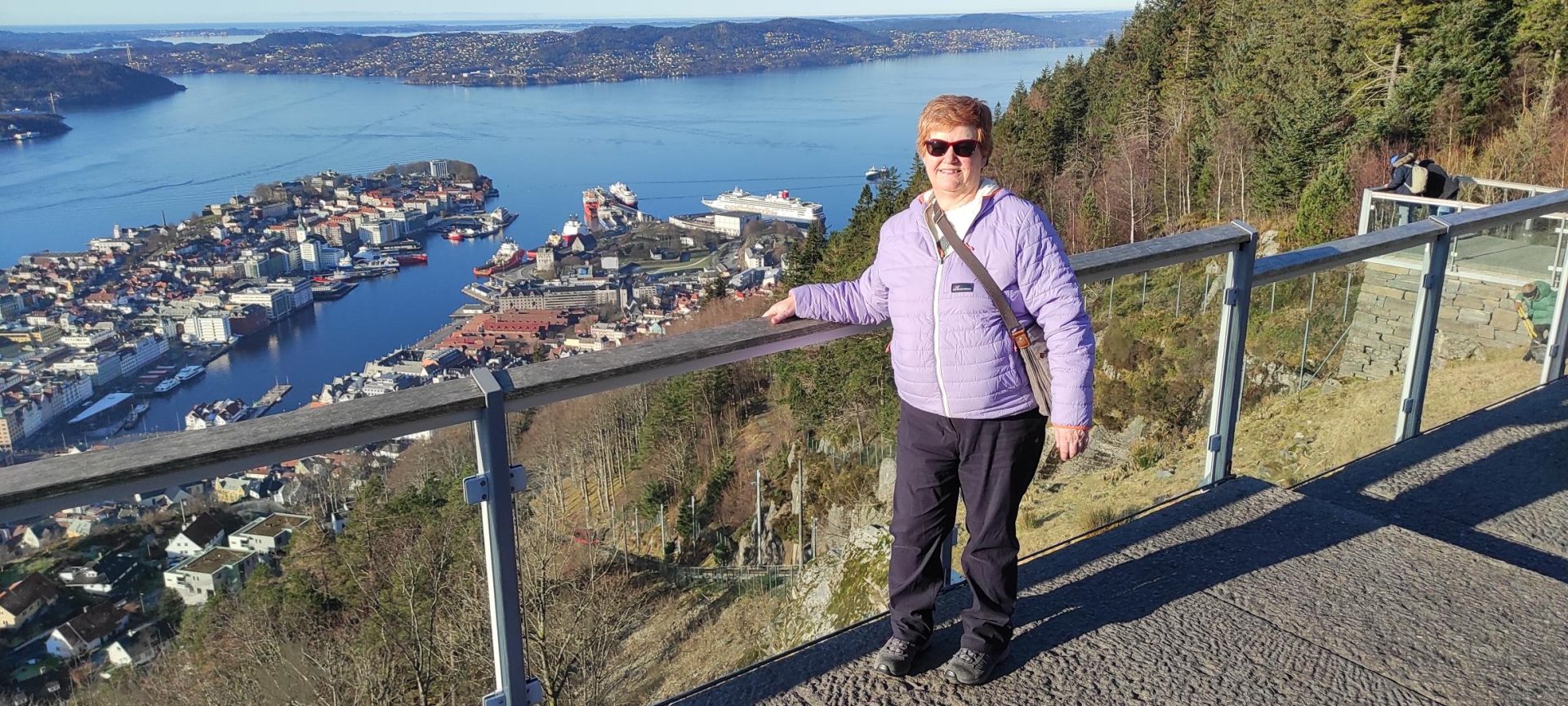
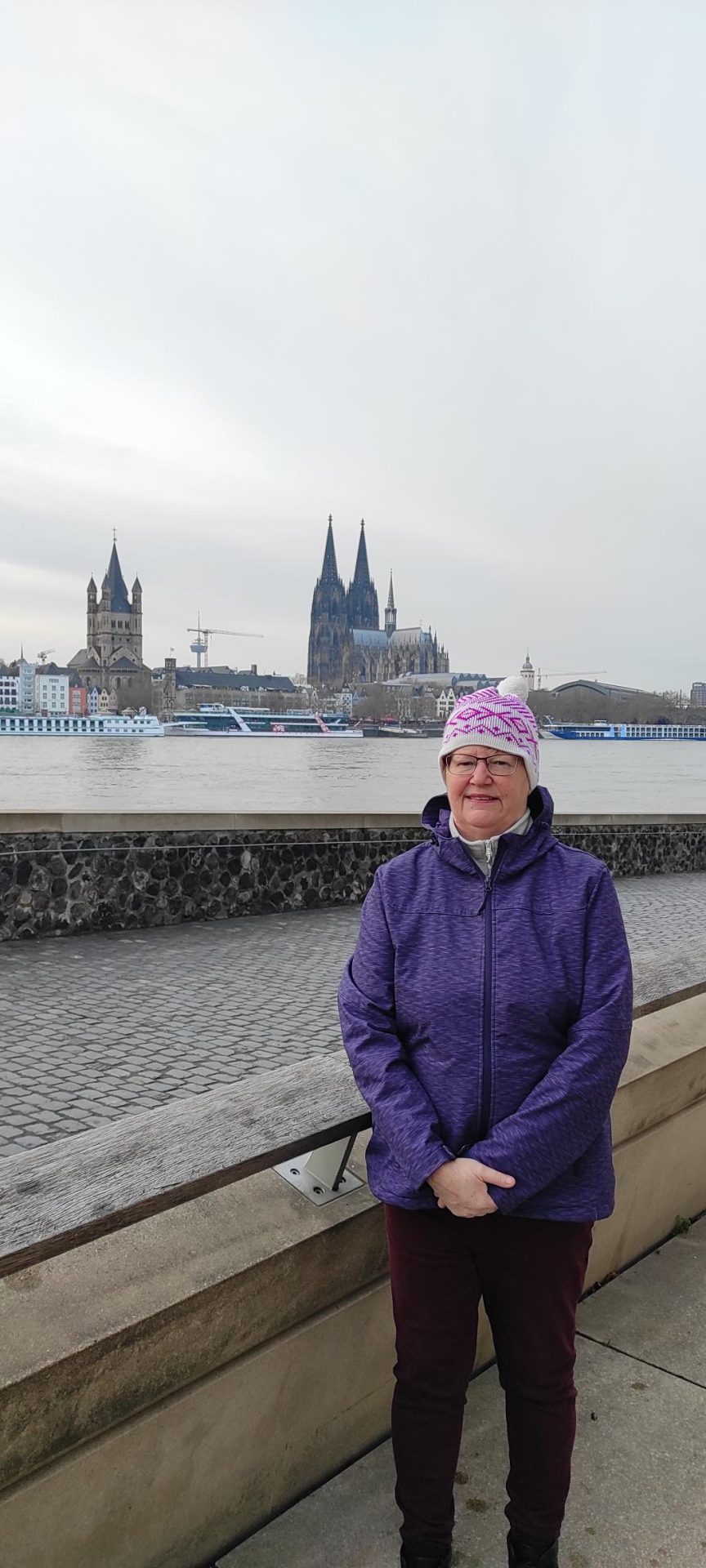
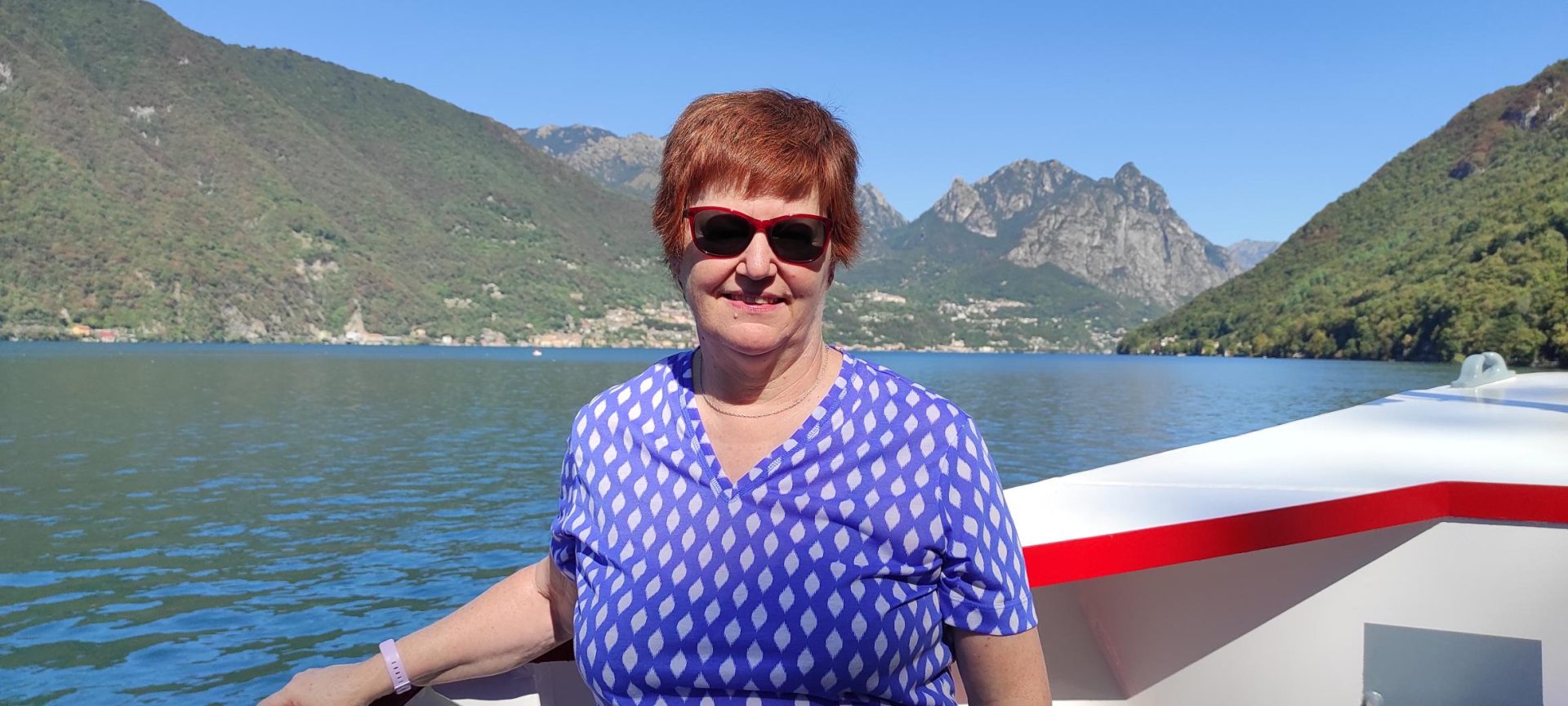
Clockwise from the left: Yvette on holiday in Bergen in Norway, Cologne in Germany and in Switzerland. Images credit: Yvette Hooks
I've been on a few cruises now. One time we went right up to Svalbard where the polar bears are. We stopped at the seed vault where they provide long-term storage for duplicates of seeds from around the world. Last February, we went to Norway again, up the Norwegian coast, right up to north of Tromsø to see the Northern Lights.
I am quite lucky; I have travelled a lot.
What book, film or podcast has interested you recently?
To my husband’s amazement, I love detective stuff. He is always getting all these cheap books on the Kindle for me. The latest one is the Yorkshire murders, and he always thinks it's strange. He says, “How can you enjoy that?” But I say, “You're reading books about Genghis Khan where thousands of soldiers are getting killed. In my books, at least there's only one or two people.”


